.png)
Have you ever watched a Formula 1 race and wondered about all the logos on the cars and driver suits? Those stickers represent big business deals. This guide explains how teams and sponsors decide what those deals are worth. We will look at the F1 Team Sponsorship Contract Value. ROI means "Return on Investment." It's about figuring out if the money a sponsor pays is worth the exposure they get.
Think of it like buying a very expensive, fast-moving billboard. Teams sell space on their car, driver, and garage. Sponsors buy that space to show their brand to millions of fans. But how do they decide the price? Let's find out.
You may also read :- F1 Car Crash Damage Calculator: Carbon Fiber Repair Cost Analysis
Understanding the F1 Sponsorship Ecosystem
F1 is a global sport. Races happen on five continents. Millions of people watch on TV and online. This makes it a powerful platform for brands.
Teams need money to build fast cars. Sponsors need a way to reach a huge audience. They work together in a special ecosystem. Global brand exposure is the main product teams are selling.
Different Types of Sponsorship Deals
Not all sponsors pay the same amount. Their deals are based on what they get.
-
Title Sponsor: This is the biggest deal. The sponsor's name is part of the team's name. Think of Oracle Red Bull Racing. The value here is enormous.
-
Principal Partner: Major sponsors with logos in top spots on the car, like the side pods or nose.
-
Official Partner: These sponsors get good logo placement, but not the very best spots.
-
Supplier: These companies provide parts or services (like tires or software) in exchange for logo placement and the prestige of being in F1.
Each type has a different contract valuation and offers a different media value.
F1 Team Sponsorship Contract Value: Logo Placement ROI Analysis
So, how do we analyze if a logo's spot is good? Experts look at many factors. They want to calculate the return on sponsorship investment. It's not just about being on the car. It's about where on the car.
Measuring Visibility and Media Value
How do we measure if people see a logo? Special companies use camera tracking and software. They count something called equivalent media value. Imagine how much it would cost to buy the same amount of TV advertising time. That's the media value.
Key things they track:
-
On-screen time: How many seconds is the logo visible on TV?
-
Logo placement quality: Is it on the front wing (seen head-on) or hidden on the underside?
-
Broadcast exposure: Is the team often in the lead and on camera?
-
Digital and social media impressions: How many times do people see the logo in photos and videos online?
A logo on the top of the side pod is worth much more than one on the rear wing endplate. This is logo exposure valuation in action.
Key Factors That Determine Sponsorship Pricing
What makes one spot cost more than another? Teams use data to set prices. Here are the big factors:
Team Performance and Championship Standing
A winning team is on TV more. Their car is in the lead and in close-up shots. Sponsors on a top team like Mercedes or Ferrari get more airtime and visibility. This means a higher sponsorship ROI. A team at the back gets less screen time, so their sponsorship slots are often cheaper.
The Premium of Prime Real Estate
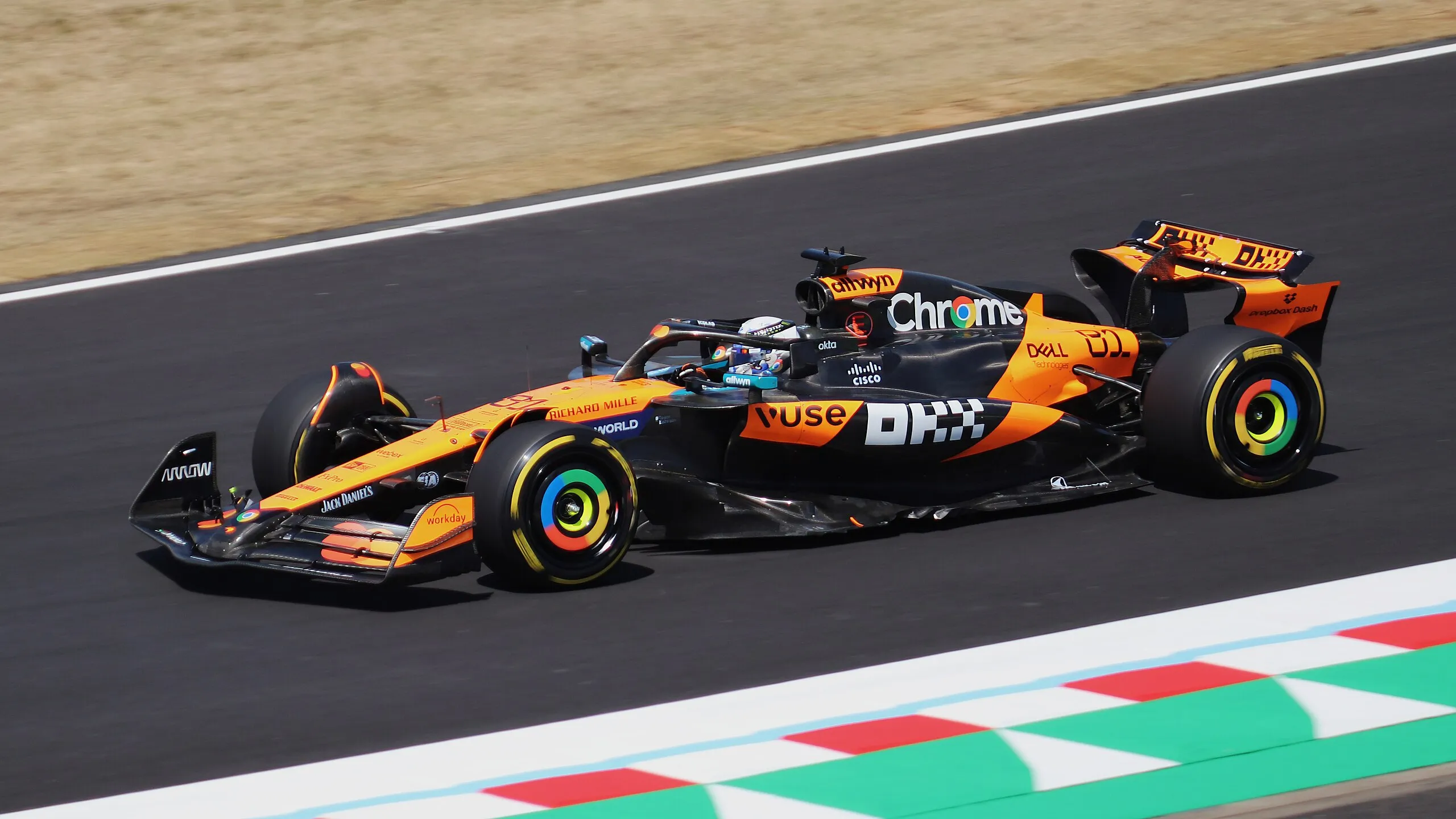
Not all spots on the car are equal. The car is divided into "real estate."
-
Prime Logo Placement Areas: The side pods, nose, front wing, and driver helmet visor. These areas get the most clear, direct camera views.
-
High-Value Brand Placement: The top of the side pod is considered the best. It's seen during overtakes, pit stops, and when the car is in the garage.
-
Driver Suit and Helmet Logos: These are very personal and get extreme close-ups during interviews and podium celebrations.
The Power of Broadcast and Digital Coverage
F1 isn't just live TV. Broadcast media analysis looks at highlights, replays, and pre-race shows. A crash (unfortunately) can also put logos in the spotlight. Also, digital content creation by the team and fans on YouTube, Instagram, and TikTok gives logos extra life. This social media amplification is a huge part of modern ROI.
Real-World Examples of Logo Placement Strategy
Let's look at how this works in real life.
-
Mission Winnow on Ferrari: This logo was placed prominently on the Ferrari engine cover and nose for years. It was a classic example of a principal partner using premium team assets for maximum global recognition.
-
BWT and the Pink Car: When BWT sponsored Force India (now Aston Martin), they didn't just get logos. They changed the entire car color to pink. This created a unique identity and massive brand visibility impact. It showed how a sponsorship can define a team's look.
-
Driver Helmet Deals: Drivers like Lewis Hamilton often have personal sponsors on their helmets. Because the helmet is shown so much, these are high-impact sponsorship zones with great ROI measurement for the brand.
Calculating the Return: More Than Just TV Time
Smart sponsors look beyond just TV. A good F1 partnership offers more.
Corporate Hospitality and Client Entertainment
Sponsors get VIP access. They can invite important clients to the race. They get garage tours and meet drivers. This helps build strong business relationships. The value of this B2B partnership benefits is huge and part of the overall contract value.
Brand Alignment and Prestige
Being in F1 is about more than ads. It links a brand to high technology, speed, and excellence. A tech company sponsoring an F1 team says, "We are cutting-edge." This brand association value is hard to measure but very real.
Content and Storytelling
Teams create amazing content. Sponsors are part of those stories. A behind-the-scenes video showing how a sponsor's software helps design the car is powerful. This marketing partnership effectiveness builds a deeper connection with fans.
The Future of F1 Sponsorship Valuation
The way we measure value is changing. Data-driven sponsorship decisions are now normal. Teams give sponsors detailed reports. These reports show exact logo exposure times and media value.
New American fans and the popular Netflix show "Drive to Survive" have brought in a new audience. This has increased the commercial value of motorsport for sponsors targeting different markets.
The global audience reach of F1 is growing. This means sponsorship contracts will likely become even more valuable. The analysis will just get more detailed.
Final Thoughts
Deciding the F1 Team Sponsorship Contract Value: Logo Placement ROI Analysis is a complex science mixed with a bit of art. It involves counting seconds of screen time, understanding camera angles, and feeling the excitement of the sport.
For sponsors, it's a powerful tool to reach the world. For teams, it's the fuel that lets them race. Next time you watch a race, look at the logos. You'll now see more than just stickers. You'll see a dynamic, multi-million-dollar billboard speeding by, with every spot carefully chosen and analyzed for maximum impact.
Frequently Asked Questions
Q: How much does it cost to sponsor an F1 team?
A: Costs vary massively. A small logo on the rear wing might cost a few hundred thousand dollars. A title sponsorship can cost over $100 million per year. It depends on the team's success and the size of the logo.
Q: What is the most valuable spot for a logo on an F1 car?
A: The top of the side pod is generally considered the most valuable prime spot. It offers excellent visibility from most camera angles, including during crucial racing moments.
Q: How do sponsors know they are getting their money's worth?
A: Teams and independent agencies provide detailed ROI analysis reports. They use special software to track on-screen logo time and calculate the equivalent advertising cost. They also measure social media buzz and website traffic linked to the sponsorship.
Q: Can smaller brands afford F1 sponsorship?
A: Yes, in smaller ways. Some brands become official suppliers, providing a product or service in exchange for a smaller logo placement. This is a great way to gain prestige and global exposure at a lower cost.
Q: Why do some logos change position during the season?
A: Sometimes a sponsor has a special promotion. They might pay extra for a better spot at their home race. Also, if a new, bigger sponsor joins, they take the best spots, and other logos might move.