.png)

It does not have to be mindboggling to maintain a car in a good state. Consider an automobile as a good friend. It requires frequent examinations to remain healthy and joyful on the long way. The most appropriate method of taking care of a vehicle is working within the schedule by the number of miles covered. This manual divides the necessary Car maintenance by mileage into simple steps according to the mileage.
The best way to avoid large issues is to follow a maintenance schedule that is based on the miles covered. It is more economical, and it does not produce any absurd failures, as well as it protects everybody. This plan is an outline to the life of a car, at least the initial few thousand miles, and far beyond 100,000 miles.
Why Following a Mileage Schedule is Your Best Bet

Motor vehicles are multifaceted machines with a large number of moving components. These components degenerate at varying rates. Mileage-dependent preventative maintenance checklist assists in identifying the wear and tear in time before it causes a breakdown. It is very inexpensive to have a new sensor with a price of 50 dollars as compared to a new engine that costs 5,000 dollars.
Adherence to this schedule also provides protection to the warranty of a car and it achieves optimum fuel efficiency. Above all it brings peace of mind. It is even more comfortable to know that a car is in the best condition and every ride will be comfortable.
You may also read :- How to Check and Change Engine Oil at Home
Car Maintenance by Mileage: The 30,000-Mile Checkpoint
The first milestone is to reach 30,000 miles. It is at this time that some of the services that are necessary will have to continue keeping the things running as new.
Essential Services for Your 30k Mile Service
This is where fluid and filter attention is paid. These are blood and bones of the vehicle.
- Engine Air filter replacement: An air filter is clean and it allows the engine to breath easily. A dirty filter contributes to increased workload, which damages the performance and gas mileage.
- Cabin Air Filter Change: It is the filter of air inside the car. Replacing it will guarantee the clean and fresh air to everyone on board.
- Fuel System Inspection: This technician needs to inspect fuel lines and injectors. The fuel system can be professionally cleaned at this point and restore power and efficiency.
- Tire Rotation and Inspection: Rotating tires after every 5,000 to 7000 miles is one of the simplest methods of ensuring that they last longer. This is also ideal to check the alignment and the depth of treads.
Mark Reynolds, an over 20-year-old master technician says, 30,000 miles is a check-up that is a neck-up on your car. It largely concerns inspections and changing of wear components such as filters. Failure to observe these may result in costlier problems in the long run such as straining the engine or wearing tires off in an uneven manner.
The 60,000-Mile Major Service Interval
The 60,000-mile mark is a big one. This is believed to be one of the biggest service intervals of the car. More important replacements are done here to make sure that they are reliable in the long run.
Key Replacements at 60,000 Miles
This service also extends the checklist of 30,000 miles yet it has even more important elements.
- Brake Fluid Flush: Brake fluid has the ability to absorb moisture, which causes corrosion and spongy brake pedal. This is because a flush retails old fluid with new, thus good, sound stops.
- Transmission Fluid Service: This is the recommended point of a drain and fill or a flush of the transmission fluid of many cars. Smooth shifting and transmission requires clean fluid.
- Replacement of Spark Plug: Streaky idling, difficult starting, and low fuel economy are effects of worn out spark plugs. New plugs reinstitute engine response.
- Extensive Brake Check: Rotors, calipers and pads are carefully examined. Replacement of brakes pads is quite frequent at this mileage.
- Coolant/Antifreeze Exchange: Coolant decomposes and ceases to prevent the processes of freezes and overheats. The engine cooling system is maintenance-dependent on a coolant exchange.
Navigating the 100,000-Mile Tune-Up and Beyond
Making 100,000 miles is an enormous feat! It is an indication that a car has been well maintained. A complete 100k miles car tune-up and check is a must in order to reach 200,000 miles.
Major Milestone Maintenance for High Mileage
Some of the most significant preventative replacements are due at this time.
- Timing Belt Replacement: It is essential. With a lot of engines, when this belt is broken, there is the possibility of a disastrous engine damage. Never exceed the recommendation of the manufacturer which is normally between 60,000 and 100,000 miles.
- Replacement of Water Pump: It happens that water pump is mostly changed together with the timing belt because it is also driven by the timing belt and it needs same labor to access.
- Check Suspension System: The struts and shocks deteriorate over time. At 100,000 miles, they should probably be inspected. The worn suspension would damage handling and tire wear.
- Serpentine Belt Inspection: This is the belt which drives the alternator, power steering pump and AC compressor. It has cracks or glazing, which shows the need to be replaced.
- An example in the garage can explain this point: One customer came in with a car with 105,000 miles on it and never replaced the timing belt. The belt snapped a week later. It was ten-fold higher than the preventative replacement would have cost. It is the ideal indication of how planned maintenance is cost saving.
Don't Forget These Regular Checks
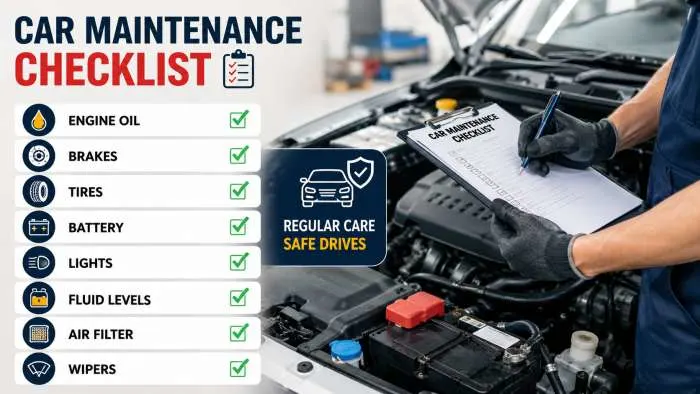
These are activities that should be performed frequently between the large milestones. They can be tracked by using a vehicle maintenance logbook that is kept in the glove box.
Ongoing Maintenance for Every Car
- Oil Changes and Filter: It is the key of any car care. Use the recommendation in the manual on synthetic and conventional oil change intervals.
- Tire Pressure and Tread: Monitor pressure in tires every month and tread level after several months. The right amount of tire pressure in terms of fuel economy and safety can never be exaggerated.
- Windshield Wiper Blades: Replace them at least once in a year in order to have a clear vision during the rain.
- Battery Health Check: Testing the battery and charging system- Ensure that the battery and charging system are checked at least once a year, particularly during the winter months.
Seasonal Car Care Tips
The changing seasons require a little bit of different care of cars.
- Preparing the Car in winter: make sure that the antifreeze protection level is good enough, put on winter tires when necessary, and turn on heaters and defrosters.
- Summer Vehicle Check: Test your air conditioning system, check the level of coolant and make sure that your tires are inflated properly because heat raises the pressure.
Conclusion: Your Roadmap to Reliability
The easiest secret of a long-lasting, reliable vehicle is to follow a vivid Car maintenance by mileage. It transforms the unpredictable and frightening repairs into the predictable and easily managable checks. With a minor investment of time and resources in between, a car could serve thousands and thousands of safe and happy miles, based on these major mileage checkpoints. The first step to take is to pick up the owner manual and identify the next service due today. Your automobile will reward you in the long term.
Frequently Asked Questions
Q: What is in case I make mostly short trips or during harsh conditions?
A: This is what is termed as severe service driving. It involves often making short trips, extreme hot or cold weather, towing or road dust. When such is the case, maintenance should be conducted at a frequency beyond what the normal service which is based on the number of miles. The severe service schedule can be found in the owner manual.
Q: am I able to do any of this maintenance myself?
A: Absolutely! Such jobs as tire pressure checks, change wipers and even replacement of an engine air filter are all excellent DIY jobs. First always begin with your owner and safety first. When it comes to more complicated work such as fluid flushes or timing belts, it is best to leave it to an official.
Q: The manual of my car says something, the mechanic claims that it is not. Who should I listen to?
A: It has to begin with what is recommended in the manual by the manufacturer. They know the car best. Depending on the state of the vehicles, their driving patterns and weather, a reliable mechanic may recommend that they change their service more frequently. Talk freely with them on their reasoning.
Q: What is the effect of frequent maintenance on resale value?
A: A full car service record is a report card of your car. It establishes that the car has been maintained in an excellent condition and this can be of great help in terms of resale or trade in value. Peace of mind costs more to the buyers.