.png)
So, you’ve got your learner’s permit or driver's license—congrats! I remember the mix of excitement and nerves when I first sat behind the wheel. Driving tips for beginners are essential because they transform fear into confidence and confusion into control. Based on my years of reviewing automotive safety data and speaking with driving instructors, the key to success is mastering the basics before you need them. Let’s get you ready for the road with advice that actually works.
Why Do Basic Driving Skills Matter So Much for New Drivers?
My initial impression of driving was steering and the accelerator. I was wrong. Operating vehicles is risk management and vehicle dynamics. National Highway Traffic Safety Administration (NHTSA) has repeatedly demonstrated that inexperience is one of the major causes of accidents.
As an illustration, a recent study noted that an unsanctioned use of lanes is a major cause of accidents with almost 11% being attributed to improper use of lanes, and another 3.5 to following improperly.
You are not driving a car, you are driving a 2000 pound machine on the street. The ability to perform the most basic exams such as braking smoothly, using a mirror, etc, is not about passing a test, but creating a framework to keep you and everyone around you safe. Defensive driving is a skill that has to be drilled post parking lot as John Goreham, an expert of the Car Talk, says it requires a lot of practice.
What Should I Do Before I Even Start the Engine?
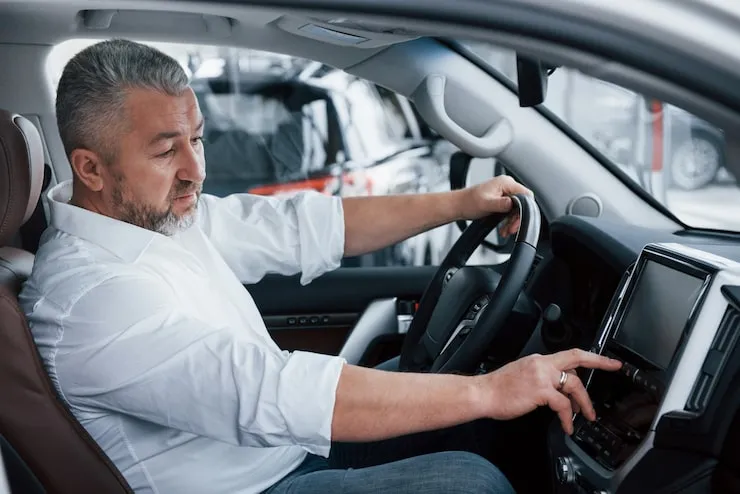
My dad is an 30-year-mechanic and insisted I do a walk-around before I ever turned the key. It is not a waste of time; it is a race-day custom.
Know Your Car's Cockpit
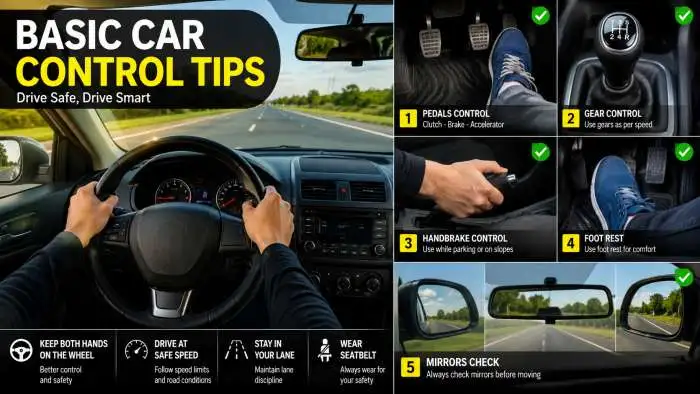
The first one is to sit in the driver seat and make it all correct. The seat must be comfortable where you can bend the knee slightly in order to press the pedals. The hands are to be on the steering wheel at 9 and 3. You must have your mirrors adjusted accordingly; your side mirrors must hardly see your side of your car so that you can have no blind spots.
Check Your Vital Fluids and Tires
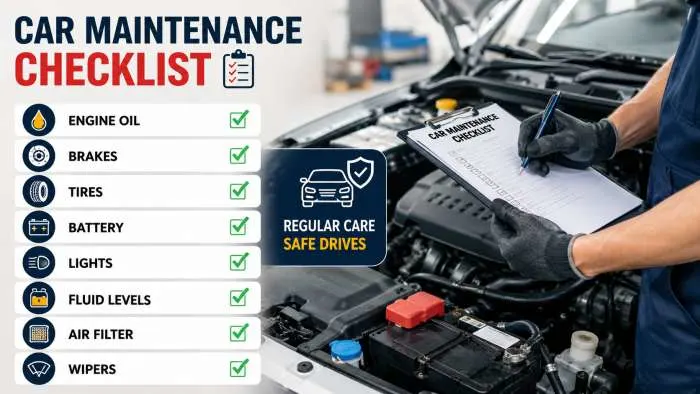
I have a tire pressure gauge in my glovebox at all times. It is important to check your tires every one month since under inflated tires are prone to blow up or lose grip during rainy seasons. Find the dipstick to your oil and pop the hood. A dashboard of any car is a place where a lot of very important information is located, yet the warnings are not to be understood without knowing what is under the hood. Monitor the level of your coolant and windshield washer fluid on a weekly basis.
You may also read :- Essential Driving Tips for New Drivers to Stay Safe on the Road
How Can I Calm My Nerves Before My First Drive?
I will never forget sweating on the steering wheel with my hands. It is quite natural to be nervous. The former recommendation is to regulate your breathing. Breath in, and then change gears. I remind my students that all of the drivers in the road were beginners at some point.
Park in a lonely parking lot and start the car. Get a feel for the pedals. Gently press the accelerator. In an automatic, the car will desire to pull off, in a manual, it is important to find the biting point in a seamless manner. Don't worry about speed yet. Emphasize on some movement of car to a few feet, halting without a rough start and reversing. This trains the muscle memory without the traffic strains.
What Are the Most Common Mistakes Beginners Make?
In hindsight, I committed nearly all of these mistakes. A fender bender can be avoided by knowing them in advance.
Forgetting to Check Mirrors and Blind Spots
New drivers have a habit of focusing on the road ahead of them and neglect their surroundings. You are required to look at your rearview mirror after every 5-8 seconds. You should not only look in the side mirrors but also physically turn your head over your shoulder to be sure that you are not switching lanes. A motorcycle or a car can be concealed in that small blind spot.
The Dreaded "Brake Tapping"
You just feel like slacking, yet when you constantly press the brakes it just throws the further driver off guard. Attempt to predict traffic flow. When you notice the brake lights are a quarter-mile away, lift your foot off the accelerator and cruise. This is a smooth driving method that will save you on your brakes and your fuel.
Forgetting the Handbrake
This is a classic! I drove a mile once with the parking brake on. It slows down the car and may destroy the brakes. You should always check your dashboard before taking off to make sure that the brake light is off.
How Do I Master the "Mirror, Signal, Manoeuvre" Routine?
This is a phrase that I was drilled by my instructor and it was the golden rule. Pull over, switch lanes, or even turn: before you do, follow all these steps:
- Mirror: Check your inside mirror, side mirror.
- Signal: Use your turn signal to inform everybody about what you wish to do. Give at least 30m signal ahead of turn.
- Manoeuvre: Only act when it is safe to act.
Always, always change lanes without signalling. The way you communicate with other drivers is your signal. When you do not use it, they do not know what you are doing hence accidents occur.
What's the Secret to Safe Highway Driving for Beginners?
The speed is frightening in highways. My first experience when I joined I-95 was memorable; I felt my heart beating. The key is speed management.
Merging with Confidence
The slowing down at the on-ramp is the biggest mistake that beginners commit. You even have to speed up to get on par with the highway traffic. The ramp allows building the speed then identifying a gap then signaling and merge. After getting in the highway, remember to keep an eye on highway speed limits, and never make sudden steering actions, that will result in roll over at high speed.
The Two-Second Rule
Drop the distance of cars--they are difficult to measure. Choose an object that is not moving on the side of the road such as a sign. As the vehicle overtaking you pass by, say one thousand one, one thousand two. When you overtake the same object before you have counted it, then you are trailing behind. triple the distance during a rain, or at night.
How Can I Stay Safe Driving at Night or in Bad Weather?

Theoretically, it is one thing to drive in ideal conditions and another in reality. I also encountered a frightening experience of driving home during fog which taught me to respect the elements.
Night Driving Basics
You can be only half seen at night. Always avoid looking at the oncoming headlights, just look at the line of white on the right side of the road to help you. When a car is behind you with bright lights, turn to the rear view mirror to the night position to cut down the glare.
Is Car Maintenance Really Part of Learning to Drive?
Absolutely. The breakdown is not only inconvenient, but also potentially hazardous. I explain to my pupils that a car is a machine that should be taken care of.
The Penny Tire Test
Your tires are everything. Insert tread groove with the inverted head of Lincoln. When you get to the top of his head, you have put on too small a tread (2/32nd of an inch), and you must have new tires at once.
Know Your Dashboard Lights
A yellow light is normally an indication of checking shortly (such as low tire pressure). A red light means "stop now." When you notice that there is a symbol of red oil cans, you should stop somewhere safe and switch your engine off. Oil may make your engine a minute of driving away.
What About Distractions? Is Talking Really That Bad?
We are more likely to consider distractors to be texting, but the recent studies by RAC surprised me. It disclosed that it is not your phone that causes the most driving errors, but talking to the people in the car (43%), daydreaming (37%).
It is even more alarming in the case of people under 25 years old as there are still a significant number of individuals using handheld phones despite the prohibition. To remain focused, it is necessary to remain relaxed during the conversation and to understand when your mind is wandering. Pull over in case you had to readjust the GPS or radio. The action of playing with touch screens leads to 26 percent of drivers making errors.
How Can I Practice to Build Real Confidence?
Practice does not only make perfect but permanent. You would like to establish good habits as permanent.
Start Quiet, Then Progress
Start in empty parking lots. Then travel to residential areas with low noise. When you are sure of being there, drive at times when there are few people on the roads such as the morning hours on Sundays. Progress slowly- gradually- have an additional challenge- take a new route, drive into a small town, or later on, challenge the highway.
Advanced Training
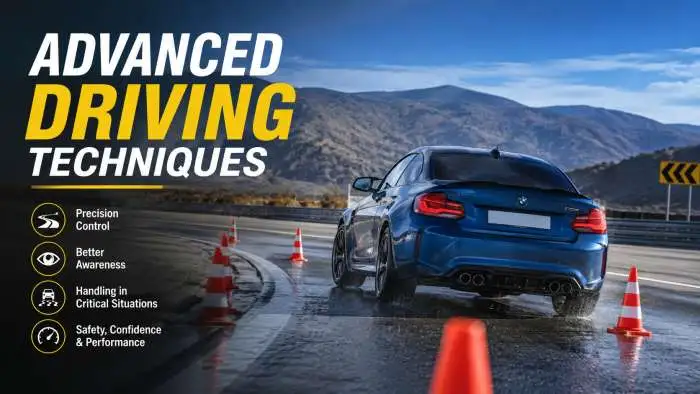
To boost out skills seriously, you may want to take a course. A good example of that is the Radford Racing School, which opened a Defensive Driving Academy aimed at assisting all drivers. Accident avoidance exercises and autocross are some of the exercises they employ to develop skills under a safe setting. Such programs will help new drivers to be more confident and seasoned drivers will sharpen their skills according to General Manager Chuck Sundstrom.
Expert Quote
"Driving is like riding a bike — the more you do it, the better you get." This simple truth from the experts at Motorist is the best advice I can give you . Don't be afraid of the road. Respect it, prepare for it, and enjoy the freedom it brings.
Frequently Asked Questions
Q: I know, but how do I know whether I am too close behind the car in front of me?
A: The three seconds rule I asked you to use. Select a sign, and tally as the car passes the sign. In case you hit the sign before 3 seconds, move away. This forms one of the driving tips most important to beginners as it provides you with time to take action.
Q: What can I do in case my car begins to skid?
A: First, don't panic. Take your foot off the gas. Don't slam the brakes. Where you want the car to go, look in that direction, and point the steering wheel in that direction. When you find the tires take back hold you can ease yourself out again.
Q: What is the frequency with which I should check my oil?
A: I do it on the other occasion I refuel. Park on a flat area, allow engine to cool off a few minutes and draw out the dipstick, wipe it and replace it to see the level. It ought to be in between the two dots.
Q: Does it make it bad to lean my hand on the gear stick?
A: In a manual car, yes. When you use your hand to rest on the stick, it may push the forks against the short which may affect the wear on the forks with time. You should never take both hands off the wheel unless you are changing gears.
Q: What do you reckon are the most important things to have in my car in case of an emergency?
A: Other than a spare tire and jack, I would always have a portable phone charger, first-aid kit, flashlight, and blanket. You will thank them in case of a breakdown in rainy conditions.