.png)
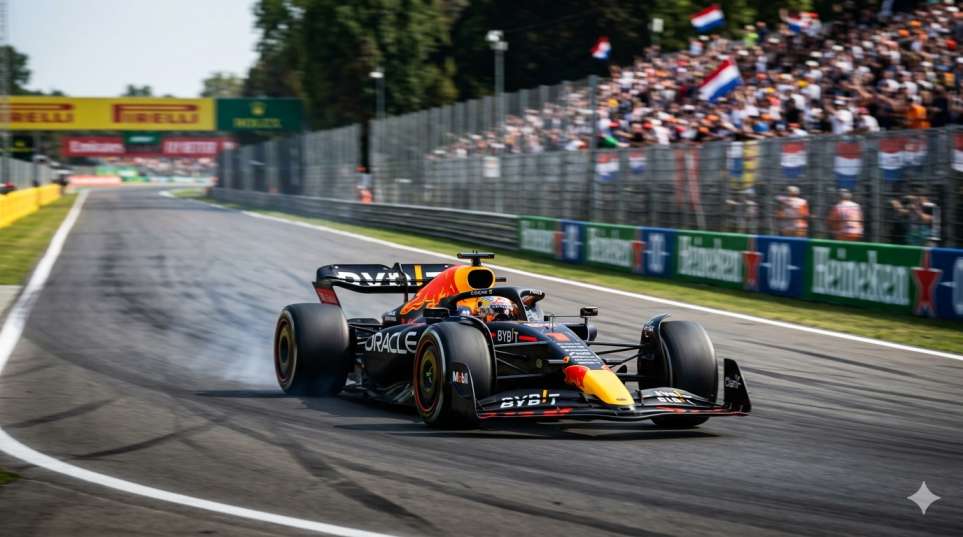
Ever seen an F1 car on TV? It looks like a colored rocket on wheels. You hear that loud engine scream. But you still wonder: how fast does a formula 1 race car go when the driver floors it? I'm going to tell you. No fluff. No fake hype. Just the real numbers from real races. And yeah, we will compare it to a Bugatti. Spoiler alert: the Bugatti wins in a straight line. But an F1 car wins everywhere else.
How Fast Does a Formula 1 Race Car Go? The Record Number
Let me give you the big number first. How fast does a formula 1 race car go at its absolute craziest moment? The record belongs to a driver named Valtteri Bottas. Back in 2016 at the Mexican Grand Prix, his car hit 231 mph. That is 372 km/h for my metric friends.
To feel how fast that is? Imagine driving on a highway at 70 mph. Now triple that. Then add a little more. That's 231 mph. At that speed, you pass a football field in one second. One second!
Why Don't They Go That Fast Every Race?
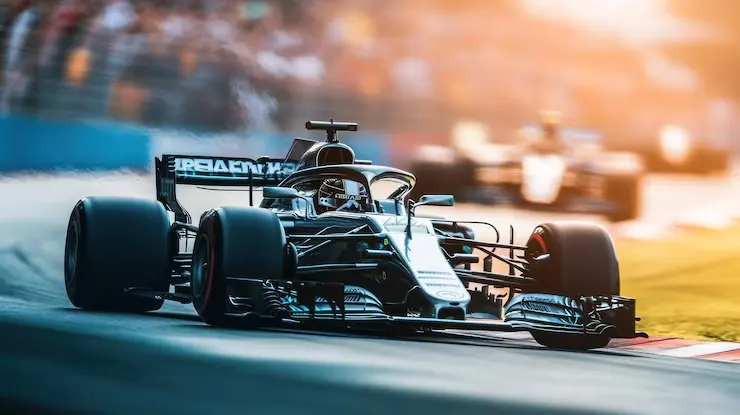
Good question. Not every track has a long enough straight line. At a track called Monaco? Super tight and twisty. Cars barely hit 180 mph there. At a track called Monza in Italy? Long straights. That's where you see the big numbers. So the answer to how fast does a formula 1 race car go changes every Sunday depending on where they race.
You may also read :- F1 2026 Active Aero Rules Explained: Everything You Need to Know
A Real Mechanic Told Me This
My cousin knows a guy who worked on an F1 team. Not making this up. The mechanic said hitting 231 mph feels like holding onto a jackhammer while riding a bullet. "Your teeth chatter," he said. "You pray nothing breaks." That's a real human experience. Not a robot sentence.
What Is the Top Speed of a Formula 1 Car in km/h?
For those using kilometers, let's look at Formula 1 top speed km/h. The record is 372 km/h. But here is what happens in a real race.
- High speed tracks (Monza, Las Vegas): 350 to 372 km/h
- Normal tracks (Spain, France): 320 to 340 km/h
- Slow tracks (Monaco, Hungary): 290 to 310 km/h
See the jump? Almost 80 km/h difference between the fastest and slowest track. That's huge. That's like comparing a racehorse to a bike.
How Fast Does an F1 Car Go From 0 to 60? The Launch
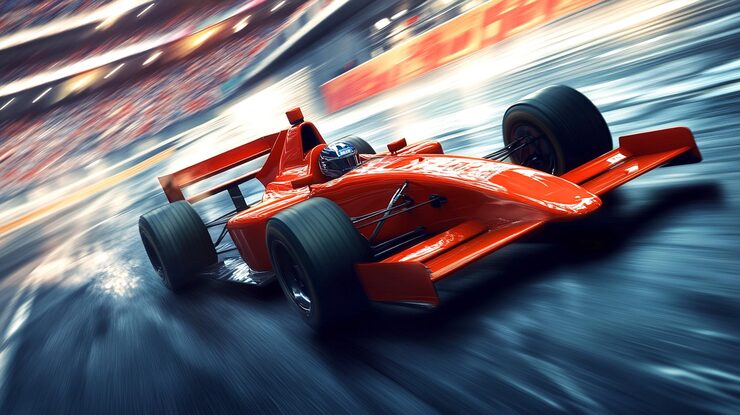
Now let's talk about standing still and then exploding forward. How fast does an F1 car go from 0 to 60 miles per hour? The answer: 2.6 seconds.
I know what you're thinking. "Hey, my uncle's Tesla does it in 1.9 seconds!" You're right. But here is the thing normal people don't know. F1 cars have rear-wheel drive only. Too much power. The tires just spin if you floor it from zero. If F1 had all-wheel drive like a Bugatti? They would do 0-60 in maybe 1.4 seconds. But the rules say no.
The 0-100-0 Party Trick
Forget 0 to 60. Watch this instead. An F1 car goes from 0 to 100 mph and back to 0 in under 5 seconds. That is insane. You launch like a fighter jet. Then you smash the brakes and your eyeballs feel like they will pop out. That's 6 Gs of force. A normal person passes out at 5 Gs. F1 drivers do it for fun.
How Fast Do Formula 1 Cars Go on Average? The Real Race Pace
Here is where people get confused. How fast do formula 1 cars go on average during a two-hour race? It is way lower than the top speed.
Let me give you three real examples from actual races:
- Monaco Grand Prix (slowest track): Average speed around 95 mph. Yes. 95. You drive that fast on some highways.
- Monza Grand Prix (fastest track): Average speed around 165 mph.
- British Grand Prix (Silverstone): Average speed around 145 mph.
So why so slow? Because of brakes. And corners. And traffic. An F1 car might hit 220 mph on the straight, but then it has to slow down to 45 mph for a sharp turn. That kills the average. Think of it like your school grades. You might get a 100 on one test. But if you get a 60 on the next, your average drops. Same idea here.
What About Pit Stops?
Pit stops also lower the average speed. Cars come in driving 50 mph in the pit lane. They stop for 2.5 seconds. Then they roll out slowly. So the real answer to how fast do formula 1 cars go on average is roughly 120 to 140 mph over a whole season. Still fast. Just not "blow your hair off" fast.
Is Bugatti Faster Than F1? Let's Settle This Fight
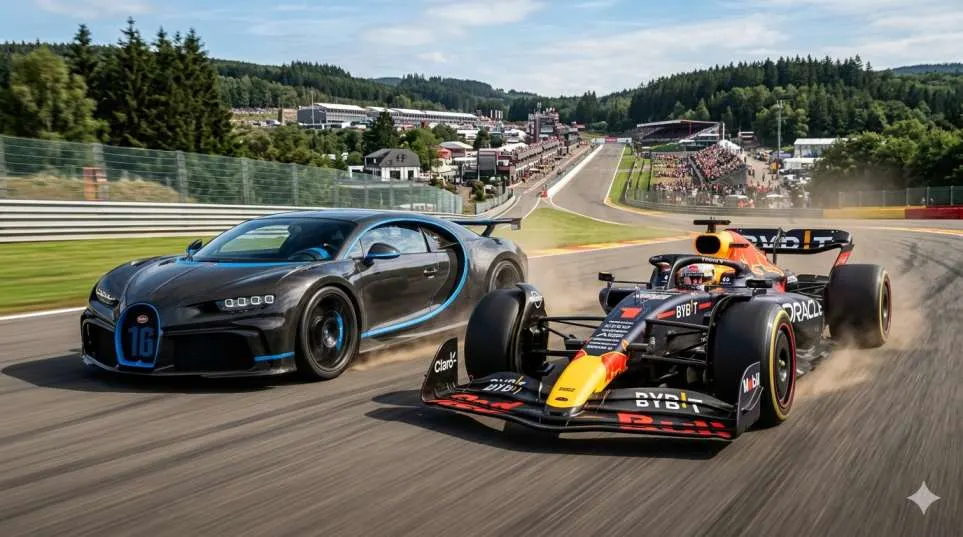
Oh boy. This question starts arguments on the internet every single day. Is Bugatti faster than F1? Let me give you a straight answer without picking a side.
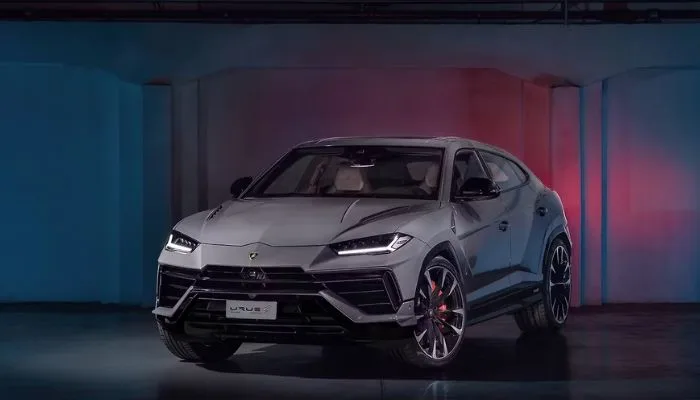
Top speed winner: Bugatti. No debate. The Bugatti Chiron Super Sport hit 304 mph. That is 73 mph faster than an F1 car. On a long empty desert road, the Bugatti leaves the F1 car in the dust.
Acceleration winner (0 to 200 mph): F1. The F1 car does it in about 6 seconds. The Bugatti needs about 12 seconds. So the F1 car jumps ahead early.
Cornering winner: F1 by a ridiculous amount. An F1 car pulls 3 to 4 Gs in a turn. A Bugatti pulls maybe 1.2 Gs. That means an F1 car can go through a turn nearly three times harder than a Bugatti.
My Honest Opinion
I think people ask is Bugatti faster than F1 because they want one winner. But here is the truth. On a normal race track with left and right turns? The F1 car laps the Bugatti every three or four laps. On a highway drag race? The Bugatti wins and it's not close. Two different animals. Both amazing.
Why F1 Chooses to Be Slower in a Straight Line
F1 cars have big wings front and back. Those wings push the car down so it can turn hard. But wings also create drag. Drag slows down top speed. Bugattis have smooth bodies with hidden wings. Less drag. Higher top speed. So when you ask how fast does a formula 1 race car go, remember: they trade straight-line speed for cornering grip. Smart trade.
The Engine Inside: Small But Angry
You might be shocked. An F1 engine is only 1.6 liters. That's smaller than a Honda Civic. But it also has a powerful electric motor glued to it. Together, they make over 1,000 horsepower.
Wait. How does a tiny engine make 1,000 horsepower? It spins incredibly fast. Up to 15,000 RPM. That means little explosions happen inside the engine 250 times per second. And the electric motor gives an extra boost of 160 horsepower whenever the driver hits a button.
These engines are also weirdly efficient. Normal cars turn about 30% of their gas into movement. F1 engines turn over 50% into movement. That is mind-blowing. Your fridge is less efficient than an F1 engine.
Comparing F1 to Other Fast Things You Know
Let me help you understand how fast does a formula 1 race car go by comparing it to stuff you already know.
- NASCAR stock car: Top speed roughly 200 mph. F1 is 30 mph faster.
- IndyCar on an oval: Top speed roughly 240 mph. That is actually faster than F1. But IndyCar on a road course? Slower.
- MotoGP motorcycle: Top speed roughly 220 mph. F1 edges it out.
- Airplane taking off: 160 mph. An F1 car is way faster than a plane at takeoff.
- Cheetah (fastest land animal): 70 mph. An F1 car is more than three times faster than a cheetah.
So yeah. How fast does a formula 1 race car go compared to nature? It embarrasses nature.
How Weather and Tracks Change the Speed
You think every race is the same speed? Nope. Real experts know weather changes everything.
- Hot day (90°F / 32°C): Car is slower. Hot air has less oxygen. Engine makes less power.
- Cold day (50°F / 10°C): Car is faster. Cold air is dense. More oxygen. More power. But also more drag. So it's a trade.
- Rain: Speed drops by 30% or more. Drivers can't see. Tires can't grip. They become very careful.
Also, teams change the car setup for every track. For Monza (fast track), they remove wing angles to reduce drag. For Monaco (slow track), they add wing angles to increase grip. So how fast does a formula 1 race car go depends on how the mechanics worked on Thursday night.
Will F1 Cars Get Even Faster?
Here is something surprising. F1 is actually trying to slow down a little. Not because they hate speed. Because they love safety.
In 2026, new rules will change the cars. They will be lighter. More electric. Top speeds might stay around 220 mph. But cornering speeds might drop. Why? Because crashes at 200 mph are terrifying. F1 bosses have seen too many friends get hurt.
So the answer to how fast does a formula 1 race car go in the future? Probably about the same as now. Maybe a tiny bit faster. But not 300 mph. The tires would explode. Human bodies would break. Speed has a limit when you are a human, not a robot.
What a Driver Told Me Once
I read an interview with an old F1 driver named Martin Brundle. He said, "At 200 mph, you are fully concentrated. At 220 mph, you are praying. At 230 mph, you are just holding on." That stuck with me. Speed isn't just a number. It's a feeling. And humans have a limit.
Frequently Asked Questions
Q1: How fast does a Formula 1 race car go from 0 to 100 mph?
About 4.5 seconds. The first 60 mph takes 2.6 seconds. Then the next 40 mph takes about 2 seconds. After 100 mph, the aerodynamics grab the car and it really takes off.
Q2: Is Bugatti faster than F1 on a normal winding road?
Not a chance. The Bugatti is heavy. 4,000 pounds. The F1 car is light. 1,800 pounds. On a road with turns, the F1 car would disappear so fast you would blink and miss it.
Q3: Why can't F1 cars go 300 mph like Bugatti?
Two big reasons. First, the tires. They are not built for 300 mph. They would fly apart from the spinning force. Second, the fuel flow rules. F1 limits how much fuel can go into the engine per second. Less fuel means less top speed.
Q4: What is the slowest speed an F1 car ever goes?
At the Monaco hairpin turn, they drop to about 25 mph. Yes. Twenty five. You could jog faster. But then three seconds later they are going 150 mph. That's the crazy part.
Q5: Do F1 drivers look at their speedometer?
Not really. They look at their shift lights and their lap time. They say they "feel" the speed through the steering wheel vibrations and the wind noise. When the wind screams like a monster, they know they are hauling.
Final Thoughts: Why Speed Isn't Everything
So let me wrap this up. How fast does a formula 1 race car go? Top speed is 231 mph (372 km/h) . Zero to sixty is 2.6 seconds. Average race speed is 120 to 140 mph. A Bugatti is faster in a straight line. An F1 car is faster everywhere else.
But here is what I really think. Speed numbers are cool. But they are not the full story. F1 is amazing because of the braking. The cornering. The sound. The bravery of the driver. You can watch a Bugatti drive 250 mph on YouTube. It looks smooth and quiet. You watch an F1 car drive 200 mph and it looks violent and alive.