.png)
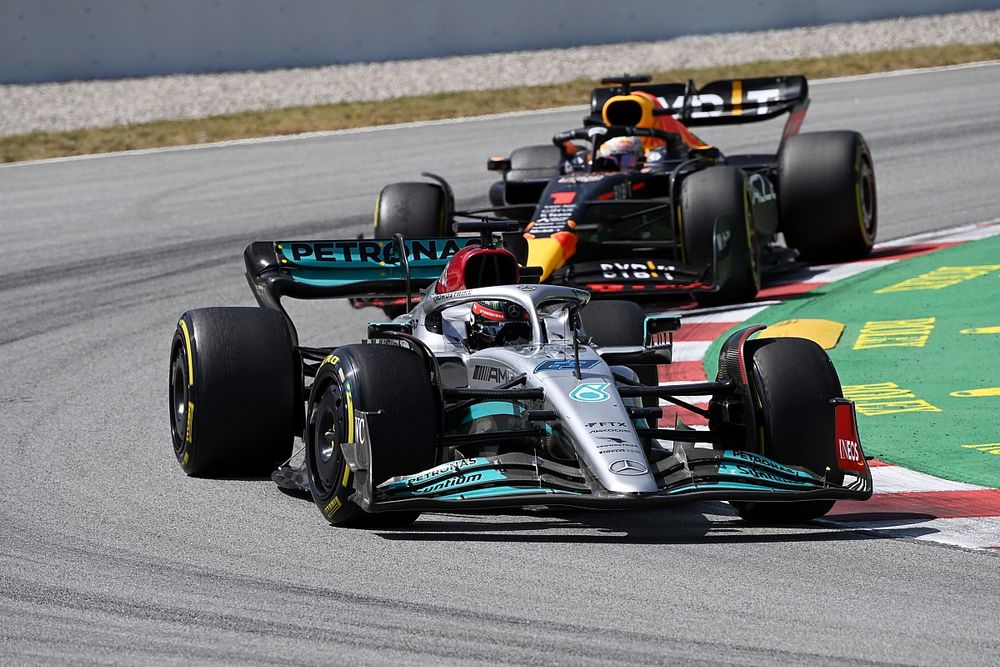
The F1 2026 regulations are the most clearing rule update Formula 1 has seen since 2022. They cover three major areas: smaller and lighter cars, a new 50/50 split between internal combustion and electrical control, and a completely new dynamic aerodynamics system that replaces the old DRS fold.
Under the modern rules, cars run a Manual Override Mode (Overtake Mode) for attacking and a separate Boost Mode for defending. The goal is quicker racing, more overtaking, and a grid that is closer in performance from front to back.
Why the F1 2026 Rule Changes Matter More Than Most People Realise
I've followed Formula 1 since Schumacher's second title. I've sat through two major regulation cycles, read every FIA technical document I could find, and watched the sport swing between processions and genuinely unpredictable racing. The F1 2026 regulations are different from anything that came before and not just in the technical sense.
The 2022 rules were meant to fix dirty air and close the field. They half-worked. The cars looked stunning, but a new aero arms race emerged within 18 months. For 2026, the FIA took a harder line. Active aero, a new power unit formula, and a weight target that forces every team to think differently.
This guide covers every major change, explained clearly. No engineering degree needed.
F1 Active Aero Rules How the New System Actually Works
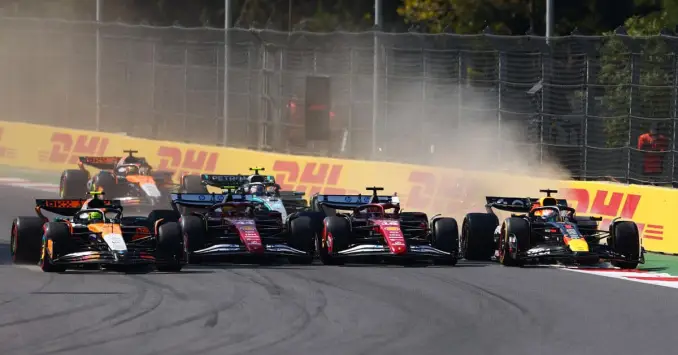
The single biggest visible change in 2026 is the F1 active aero system. Gone is the simple DRS flap that drivers opened on straights. In its place sits a fully integrated active aerodynamics setup that adjusts multiple surfaces simultaneously based on speed, cornering load, and race mode.
F1 Active Aero Explained: X-Mode vs Z-Mode
The F1 active aero system works across two states. The FIA calls them X-Mode and Z-Mode.
- X-Mode is the low-drag configuration. It activates automatically above a certain speed threshold on straights, flattening both the front and rear wing elements to cut through air more efficiently. Top speed goes up, but downforce drops so the car is faster in a straight line and more vulnerable mid-corner.
- Z-Mode is the high-downforce setting. It kicks in automatically at lower speeds when the car needs grip corners, chicanes, slow-speed sections. The wings load up, braking distances shorten, and the car plants itself to the road.
Unlike DRS, drivers don't press a button to open a flap. The system reads speed sensors and switches between modes on its own. Teams can tune when and how aggressively the transitions happen and that's where the setup competition starts.
The active aero concept in 2026 is far more sophisticated than DRS ever was. DRS was a blunt instrument. This is a scalpel it gives you drag reduction everywhere you need it and grip everywhere you need that too. - Gary Anderson, former Jordan and Stewart F1 technical director, writing for The Race, 2025
You may also read :- F1 Team Sponsorship Contract Value: Logo Placement ROI Analysis
Why Active Aero Replaces DRS in the 2026 F1 Regulations
DRS had one job: let the chasing car go faster on a straight. It worked sometimes too well. Many fans complained that DRS made overtaking too easy and artificial. A faster car just sailed past without any real battle.
The F1 2026 active aero rules aim for something more nuanced. Because both the leading and chasing car have the same active system, the advantage is structural and automatic not a push-button trick. The FIA believes this closes gaps on straights while keeping genuine racing into braking zones.
F1 2026 Overtake Mode What It Is and When Drivers Use It
The F1 2026 Overtake Mode is the driver-controlled power boost that replaces the old ERS deployment button. It draws more energy from the battery pack and pushes extra electrical power to the rear axle for a set number of seconds.
How F1 2026 Manual Override Mode Works in a Race
Drivers call it Manual Override Mode (MOM) in team radio shorthand. The rules allow each driver a limited number of seconds per lap exact allocation varies by circuit where they can deploy this extra power burst.
Pair that with the car in X-Mode (low drag, flat wings) and you get maximum attack potential. The car is lighter on downforce but carrying maximum straight-line speed and extra electrical push. That's the ideal overtaking configuration under the 2026 F1 rules.
The catch? Deploy too early and you've burned your allocation before you reach the braking zone. Deploy too late and the gap never closes. The 2026 F1 Overtake Mode strategy becomes a genuine skill layer something teams will spend entire simulator sessions optimising.
F1 2026 Boost vs Overtake Understanding the Two Power Modes
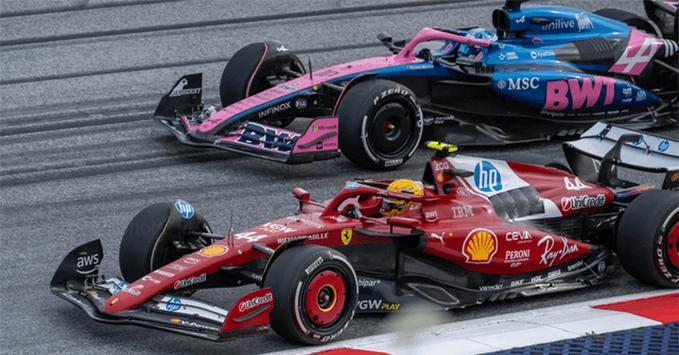
The most confusing part of the F1 2026 regulations for new fans is the difference between Boost Mode and Overtake Mode. They sound similar. They serve opposite purposes.
Boost Mode vs Overtake Mode: The Key Differences Explained
Boost Mode is the defensive setting. When a driver is being chased, they can activate Boost to hold maximum power output for longer, keeping their straight-line speed high and making it harder for the car behind to close the gap.
Overtake Mode is the attacking setting. More electrical deployment, used when you're the chasing car trying to pull alongside into a braking zone.
Both modes draw from the same energy store. Use Boost too much defending and you've got nothing left when you need to attack later. That energy management tension is exactly what the FIA designed into the F1 2026 power unit regulations it forces strategic decisions on every lap, not just at pit stops.
Quick Comparison: Boost Mode vs Overtake Mode
- Boost Mode: defensive driver being chased activates for sustained power
- Overtake Mode: offensive chasing driver activates for extra push on straights
- Energy source: both draw from the same MGU-K battery allocation
- FIA allocation: limited seconds per lap, circuit-dependent
- Strategic risk: burning both early leaves a driver exposed in the final third of the race
F1 2026 Power Unit Rules The 50/50 Split and What It Changes
The new F1 2026 power unit formula is built around one number: 50. Half the total power comes from the internal combustion engine, half from electrical systems. That's a major shift from the current hybrid era, where the ICE still produces roughly 80% of output.
F1 2026 Engine Regulations Explained Simply
The ICE stays as a 1.6-litre V6 turbo. The MGU-H (the energy recovery unit that harvested heat from the turbo) is gone it was too expensive and too complex for new manufacturers to develop from scratch.
In its place, the MGU-K output is dramatically increased from 120kW to around 350kW. That's where the 50/50 split comes from. The battery also grows, stores more energy, and recharges faster under braking.
Why does this matter beyond the engineering? Because removing the MGU-H lowered the cost of entry. Audi joined as a works team. Ford-backed Red Bull developed a new power unit from scratch. The manufacturer landscape for F1 2026 is the most competitive in over a decade.
"The power unit shift for 2026 is the most significant since 2014. Dropping the MGU-H alone changes everything it's the piece that cost new manufacturers hundreds of millions just to get competitive. Now the playing field opens up." Mark Hughes, F1 technical correspondent, The Race, October 2024
Smaller, Lighter Cars Under the F1 2026 Technical Regulations
The 2022 cars were widely criticised for being too heavy. The minimum weight target ballooned to 798kg a figure that made porpoising worse and put extra stress on Pirelli tyres. The F1 2026 technical regulations cut both dimensions.
Cars get shorter (by roughly 200mm) and narrower. The minimum weight target drops to around 768kg. That sounds like a small difference on paper. On track it means quicker direction changes, more responsive steering, and cars that follow each other more closely through medium-speed corners which is exactly where overtaking setups matter most.
How the 2026 Car Dimensions Help Create Closer Racing
The active aero system and smaller car dimensions work together. A lighter, narrower car produces less turbulent wake. The car following picks up cleaner air sooner after cornering. Combined with X-Mode activation on the straight that follows, the chasing driver gets a real shot at the braking zone.
This is what the FIA spent four years modelling. Whether it works in a race on different circuits, different tyre compounds, different weather is something the 2026 season will answer.
F1 2026 Cost Cap and Sustainability Rules
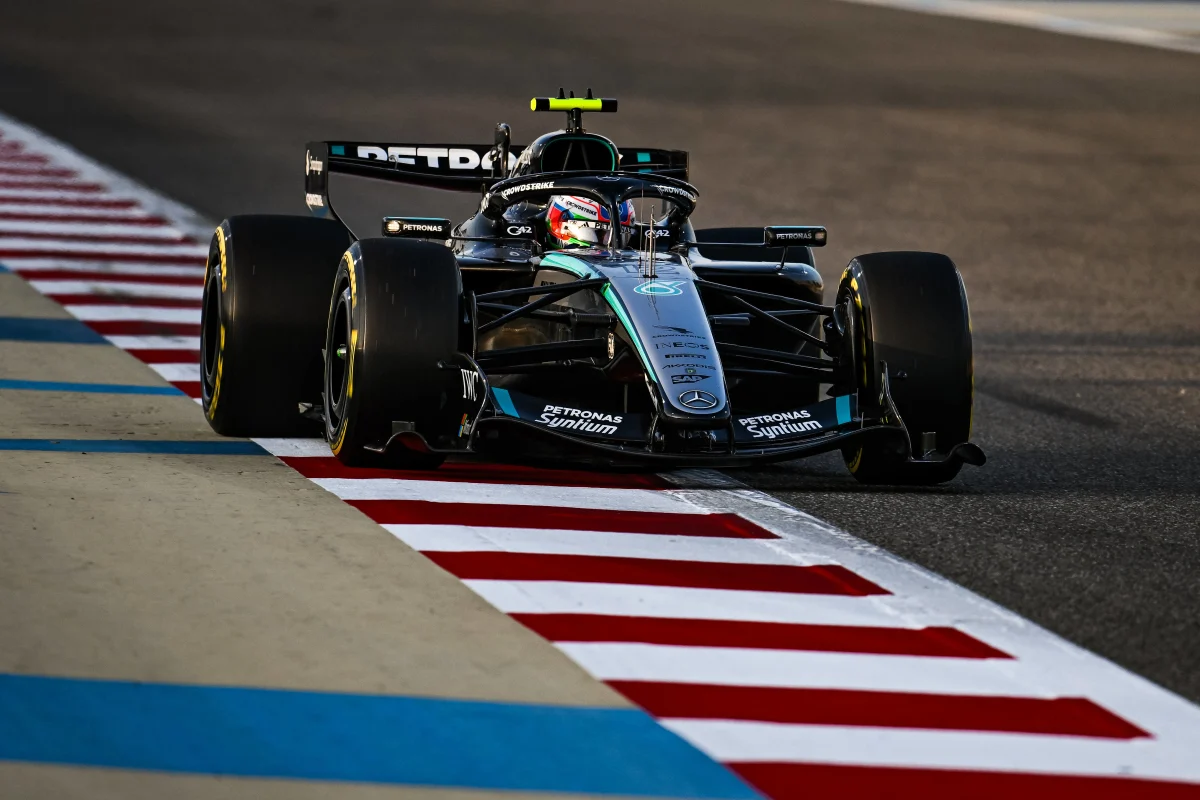
The financial regulations running alongside the 2026 technical rules keep up the cost cap system introduced in 2021. The cap stays in the range of $135 million per season for on-track use, with adjustments for staff headcount.
On the fuel side, F1 2026 mandates 100% sustainable fuel across all power units. Each team runs the same fuel spec from a certified sustainable source — no fossil fuel component at all. A few engine manufacturers began testing these fuels through the 2024 and 2025 seasons as part of the homologation process.
FAQs About the F1 2026 Regulations
What are the biggest changes in the F1 2026 regulations?
The three headline changes are: active aerodynamics replacing DRS, a 50/50 ICE-to-electric power split in the new power unit formula, and smaller, lighter cars with a reduced minimum weight target. Together they represent the most significant technical overhaul since 2022.
How does F1 2026 active aero work?
F1 2026 active aero uses an automated system that switches between X-Mode (low drag, high speed) and Z-Mode (high downforce, grip) without driver input. Speed sensors trigger the transitions automatically. Teams configure when and how sharply the modes switch as part of their setup work.
What is the difference between Overtake Mode and Boost Mode in F1 2026?
Overtake Mode is for attacking the chasing driver deploys extra electrical power to close a gap. Boost Mode is for defending the leading driver holds maximum power output to maintain straight-line speed. Both draw from the same battery allocation, so using one reduces the other. That energy management trade-off is one of the main new strategic layers in 2026.
Why did F1 remove the MGU-H for 2026?
The MGU-H (Motor Generator Unit Heat) was dropped because it was prohibitively expensive to develop. Only manufacturers already deep in the technology could compete. Removing it lowered the entry barrier for new power unit suppliers a key reason Audi joined F1 for 2026 and Ford-backed Red Bull built a new unit from scratch.
Will the F1 2026 regulations make racing closer?
The FIA's modelling suggests yes smaller cars, less turbulent wake, active aero that benefits following cars, and driver-controlled deployment modes all point toward more competitive racing. Whether that holds across a full season on circuits ranging from Monaco to Monza is the real test.
Several drivers and engineers who've spoken publicly describe cautious optimism about the 2026 F1 overtaking regulations, with the honest caveat that new rules always produce surprises.
Final Thoughts: What to Watch For in 2026
The F1 2026 regulations are ambitious. They change the car, the engine, the aero philosophy, and the fuel all at once. That kind of simultaneous overhaul always produces a chaotic opening season. Some teams nail the concept immediately. Others spend half the year chasing baseline performance they never find.
The active aero system is the piece I'll be watching most closely. The theory is elegant: give both cars the same tools, let physics and strategy decide who gets to the braking zone first. The DRS era rewarded pure straight-line speed. The F1 2026 active aero and overtaking rules should reward something more complex better energy management, sharper setup decisions, and braver driving.
That's a good direction for Formula 1. Whether the first season delivers on it is a conversation we'll be having in December.