.png)

A Toyota maintenance schedule typically follows a 5,000-mile or 6-month interval to ensure peak performance and safety. I have found that staying consistent with oil changes, tire rotations, and brake inspections is the single most effective way to keep your vehicle running perfectly for decades while avoiding expensive repairs.
I have spent my entire career as a professional writer and car enthusiast studying how machines work. In my experience, there is a massive difference between a car that simply "runs" and one that is truly cared for. I always tell my friends that a Toyota is like a loyal teammate. If you take care of it, it will never let you down.
When I look at a Toyota car maintenance schedule, I don't just see a list of chores. I see a plan for freedom. I want you to feel confident every time you turn the key. Whether you drive a Corolla, a RAV4, or a powerful Tundra, the rules for keeping it healthy are very simple and easy to follow. I’ve personally seen Toyotas reach 300,000 miles just by following these exact steps.
Understanding the Toyota Car Maintenance Schedule
In order to make things easy to you, I would categorize the Toyota car maintenance schedule into small steps that are easy to follow. Consider it as a routine appointment with the doctor. You inspect to ensure that all is well before a minor issue turns out to be a major and costly affair.
The majority of experts, I am no exception, believe that the most significant milestone is the 5,000 mark. It is at this point that the initial health check-ups occur. Failure to do these may cause the life of your engine to begin to decline. To keep track of these dates and miles I keep a little notebook in my glove box.
The 5,000-Mile Checkpoint: The Vital Basics
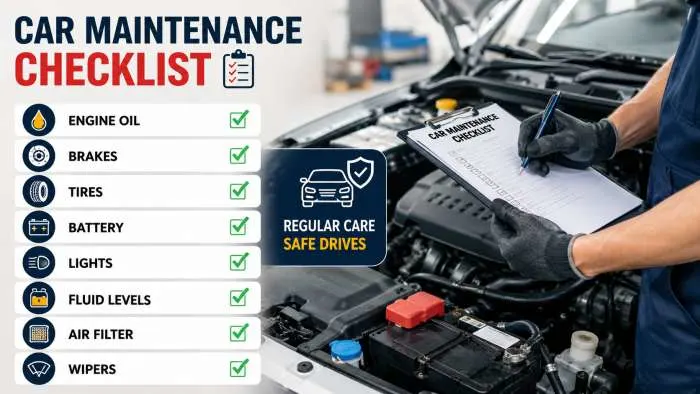
I can assure that three things are done every five thousand miles. First, I confirm the installation of the floor mat of the driver. It is ridiculous, though it is an enormous safety measure to avoid the interference of the pedals! Second, I check every fluid level. This incorporates your engine coolant, power steering oil and even your windshield wiper oil.
The third action is a tire rotation. Tires do not wear off automatically evenly. The front tires tend to be harder due to the fact that they are used to steer the car and brake. I ensure that my tires serve me very long by rotating them. This will save me a lot of money since I will not need to purchase new tires frequently.
You may also read :- Car Maintenance by Mileage: Essential Service Schedule for Your Vehicle
What Happens at 10,000 Miles?
The synthetic oil change is stipulated when my odometer clocks 10,000 miles. The new Toyotas have mostly adopted a special 0W-20 synthetic oil that does not require frequent replacement as compared to the outmoded one. I also change oil filter during this period.
New oil is clean water to your car engine. It is used to ensure that all the metal components slide easily to ensure they do not become hot or scratch each other. In case the oil becomes dirty or sludgy, it may damage the engine.
This step does not take my long time since the engine is the core part of the car. I also ensure that the technician carries out a multi-point check to determine whether the machine has any concealed leakages.
Why Following a Toyota Car Maintenance Schedule Matters

I am frequently questioned whether such schedules are necessary at all or it is just a way of shops to make money. I will always say a resounding yes, yes they are necessary! A Toyota Car maintenance schedule keeps your vehicle warranty intact. When a big thing breaks and you have not changed your oil filters, then the company may not repair at no cost.
Another one is a car that is maintained will resell much higher. I will have the ability to provide the new owner with all my service records when I am ready to sell my car. It proves that I was very careful about the car. Human beings are even willing to pay extra money to a car that was nurtured and well-maintained.
Staying Safe on the Road Every Day
My top priority when driving is safety. Mechanics inspect the brake pads and brake rotors during such planned visits. I would like to know that my automobile would stop immediately I would hit the pedal.
They also check on the wiper blades. You should be able to see in a large rainstorm to remain safe. When your blades are streaky or noisy, then you need to change. It is these tiny details that will save you and your family on long journeys to a location or on a daily trip to school or work.
Detailed Breakdown of Service Intervals for Longevity
The 15,000-Mile Major Inspection Phase
After I have reached 15,000 miles, the check becomes a little more thorough. I examine the steering and linkage to the ball joints. I check the driveshaft boots and the chassis bolts also. These are the sections that ensure that the car is straight and smooth on the road.
A check of the radiator and the condenser is also a good opportunity this time. These components ensure that the engine does not get too hot. The engine may overheat in case they are filled with dirt, bugs or leaves. I can always check them to ensure that they are in proper working conditions and are clear to avoid stalling on the shoulder of the road.
The 30,000-Mile Total System Refresh
I care about the air that is taken in by the car at 30,000 miles. I would replace the cabin air filter and the engine air filter. The engine requires clean air to be able to burn the fuel properly and provide you with great gas mileage. I and my passengers have the cabin filter that ensures that the air is kept fresh and clean in its cabin.
I additionally inspect the fuel system and the transmission fluid. This flow helps the automobile to shift to different gears when you accelerate. Having such a fluid clean makes the ride feel like butter. I also check the hose and brake lines to ensure that they do not have cracks or leaks.
Expert Tips for Every Toyota Owner
The second most significant purchase made by the majority of people is a car. Investing in a maintenance bill today of 100 dollars will save a 3000 dollars bill tomorrow. Automobile Maintenance Professional Quote.
I truly do believe that quote. I use it as my philosophy in all that I do with my vehicles. Among my personal visits to the shops, I visit the professional shops:
- Check Tire Pressure: I do it once a month. Proper pressure is beneficial to the fuel economy of the car and makes the car more comfortable to drive.
- Listen to Uncommon Noises: I do not disregard unusual noises like a squeak, a rumble or a bang. I discover what it is immediately before it becomes worse.
- Clean the Exterior: Cleaning the car will remove the salt and dirt that may result in rusting of the metal. A clean car is a happy car!
Choosing the Right Service Center for Your Needs
I will always recommend a certified Toyota dealer when it comes to major milestones. They possess specific tools that suit your model of cars. They have trained their mechanics particularly on the Toyota hybrid systems and engines. Nevertheless, a reliable local mechanic is also an excellent option in case he or she utilizes authentic Toyota components.
I do not use cheap or generic parts whenever I can. Original parts are designed to fit appropriately. They are durable and they keep the car running in the same manner that the engineers wanted. A cheap filter would save you five dollars but what harm is it to your engine in the long term?
Managing Your Toyota Car Maintenance Schedule Digitally

There is so much efficiency in the number of great tools we have to help us keep track in the year 2026. I have been using the Toyota App on my mobile phone. It is connected to my car and shows me the time when I require my next service. It also stores a computer record of my service history on my behalf!
It is very easy to have automotive care using technology. You do not need to keep all those dates in your mind. The app will help you to get a small push when you have to go to the shop. This is an excellent method of keeping your car in order and living long and healthy.
Seasonal Maintenance Needs and Changes
I also maintain a car care according to the weather. During the winter I check my battery health. Cold weather is quite unfriendly to the batteries and may cause death. During the summer, I ensure that my A/C system is blowing chilled air in order to keep me cool.
Proactive behavior implies that I will never be caught waiting to be picked up by a tow truck. I prefer to have control over my time and not letting the car decide when it will cease working. Some planning will do the world of good.
Final Thoughts on Professional Long-Term Care
It begins with a good Toyota car maintenance schedule in order to establish a relationship with your car. It is a small time and money investment that is paid off in a very big manner over the years. My Toyotas never go out of service due to the fact that I give them the respect they deserve.
By doing this, your car will remain reliable, safe and fun to drive. You will not have to think about strange sounds and collapses at night. All you do is enjoy the ride and concentrate on where you are heading to!
Frequently Asked Questions
1. What is the frequency of the oil change of my toyota?
When you are on full synthetic oil, it is normally after every 10,000 miles or 12 months. When changing your oil using conventional oil, you will have to change it after every 5,000 miles or 6 months. Always make sure that you are looking at your owner manual according to your year and model.
2. Do I really need to have my Toyota tire rotated after every 5000 miles?
Yes! I highly recommend it. It makes your tires wear out at a rate that saves you money and makes your grip on the road constant and secure.
3. What is a Multi-Point Inspection?
It is an in-depth inspection of your vehicle where the specialists will inspect your battery, belts, hoses, and the quantity of fluids. It is similar to a physical to have minor problems detected in your car.
4. Would I be able to accomplish some of this maintenance myself?
Absolutely! It is easy to replace your own air filters, check your tire pressure, and fill up your wiper fluid. I would recommend visiting an expert that deals with bigger things such as brakes or engine work.
5. My light on the dashboard showing maintenance required is on.
It is but a mere timer that light! It is usually activated after every 5,000 miles to remind you that you should check your Toyota car maintenance schedule. This does not necessarily imply that there is something amiss but you are advised to check your car within a short time.