.png)
Driving is something most of us do every day. But many people forget how dangerous a car can be. Every year, thousands of crashes happen because drivers make simple mistakes. The good news is that you can avoid most of these accidents. You just need to learn the right safe driving techniques.
I have spoken with driving instructors who have 30 years of experience. They all say the same thing. Most crashes are not accidents. They are caused by bad habits. This blog will show you how to break those habits. You will learn the top 10 road safety tips that work in real life. You will also learn what to do on slippery roads, in fog, and when headlights blind you. Let’s get started.
What Are Safe Driving Techniques? A Simple Answer for New Drivers
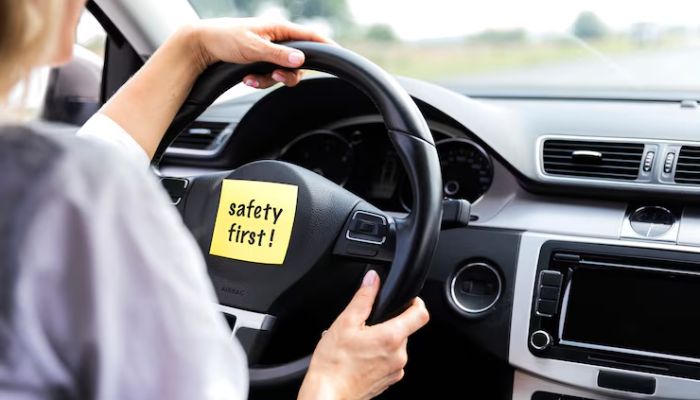
If you are new to driving, you might ask, “What are safe driving techniques?” The answer is simple. These are specific moves and habits that lower your risk of a crash. They are not hard to learn. But they do take practice.
Think of safe driving techniques as your shield. Every time you drive, dangers are all around you. A kid might run into the street. A car might stop suddenly. Rain might make the road slick. Your techniques are what keep you safe when these things happen.
You may also read :- Beginner Car Driving Tips: Learn to Drive Safely Step-by-Step
Why Most Drivers Forget the Basics of Road Safety
Many drivers think they are already safe. They have been driving for years. But experts see a different story. People drive with one hand. They look at their GPS too long. They eat breakfast behind the wheel. These small actions lead to big crashes.
A driving safety expert named Mark Wilson told me, “Most drivers only react to danger when it is right in front of them. Safe drivers see danger before it gets there.” That is the heart of good driving. You must always look ahead and plan your next move.
Top 10 Road Safety Tips That Could Save Your Life Today
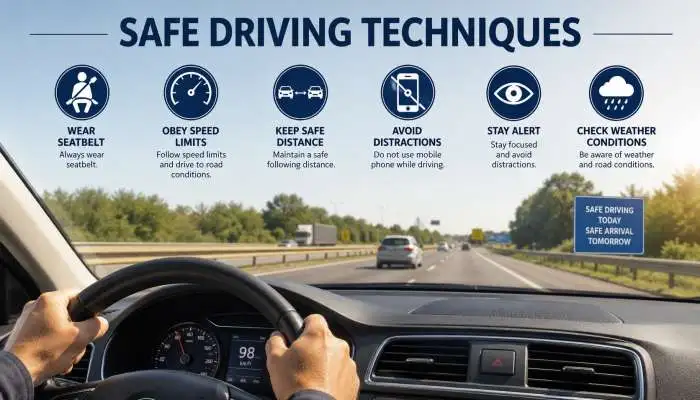
Let me share the top 10 road safety tips that driving schools teach. These are not fancy tricks. They are simple habits. If you do these ten things every time you drive, you will cut your crash risk by more than half.
- Put your phone away before you start the car. One text can wait. Your life cannot.
- Use your turn signal for every turn. Even in parking lots. Even when no one is around.
- Check your mirrors every 5–8 seconds. Know what is behind you and beside you.
- Leave three seconds of space between you and the car ahead. More space equals more time.
- Slow down before curves, not during them. Braking in a curve can make you spin out.
- Look 10–15 seconds ahead. Do not just stare at the bumper in front of you.
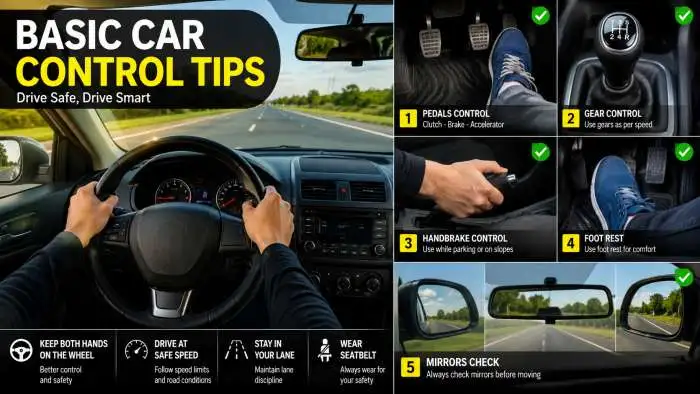
- Keep both hands on the wheel at 9 and 3 o’clock. This gives you the most control.
- Never drive when you are angry or very tired. Your brain needs to be clear.
- Always buckle up before moving. Even for a short trip to the store.
- Follow the speed limit. Speed limits are not suggestions. They are set by engineers who study the road.
Road Safety Tips for Public Transport Users and Pedestrians
Many people think road safety tips for the public only apply to drivers. That is not true. If you ride a bus, walk to work, or ride a bike, you also need to be smart. Crashes hurt everyone near the road.
Here are simple road safety tips for public spaces:
- Make eye contact with drivers before you cross in front of them.
- Never assume a driver sees you. Many drivers look right at you and still turn into your path.
- Stay off your phone when you walk near traffic.
- Wait for the bus away from the curb. Buses can clip mirrors and signs.
Safe Driving Techniques for Slippery Roads: Ice, Rain, and Snow

Winter weather is scary. Summer rain can be just as bad. When the road gets wet, your tires lose grip. You need special driving techniques on slippery roads to stay safe.
How to Stop Your Car on Black Ice Without Panicking
Black ice is invisible. One second you are fine. The next second, your car is sliding. Most people slam the brakes. That is the worst thing you can do. Here is what experts say about driving techniques on slippery roads with ice.
First, take your foot off the gas. Do not hit the brake. Let the car slow down on its own. Keep the steering wheel straight. If you need to turn, turn very gently. If your car has anti-lock brakes, you can press the brake firmly but do not pump them. If you do not have anti-lock brakes, pump the brake gently.
Rainy Roads Need Slower Speeds and Gentler Moves
Rain mixes with oil on the road to make a slick film. This is worst in the first 15 minutes of a rainstorm. When you drive in rain, turn on your headlights. Slow down by 5–10 miles per hour. Do not use cruise control. Cruise control can make your wheels spin if you hit a puddle.
Safe Driving Techniques in Fog Conditions: When You Cannot See 10 Feet
Fog is dangerous because it hides everything. You cannot see the car ahead. You cannot see the curve coming. You cannot see the deer about to jump. Using the right safe driving techniques in fog conditions can save your life.
Low Beams, Not High Beams, Are Your Best Friend in Fog
Many drivers turn on high beams in fog. That is a huge mistake. High beams point up and reflect off the fog. This makes a white wall in front of your eyes. Always use low beams in fog. Low beams point down at the road.
Also, slow way down. If the fog is very thick, pull off the road completely. Find a parking lot or a wide shoulder. Turn off your car and wait. Being late is better than being in a crash. When you drive in fog, follow the safe driving techniques for fog conditions that truckers use. They roll down their window and listen for other cars.
Use Road Lines to Guide You When Fog Hides the View
Look at the white line on the right side of the road. That line shows you where the edge is. Do not look at the center yellow line. That line pulls you toward oncoming traffic. Keep your eyes on the right edge line. This is one of the oldest safe driving techniques used by professional drivers.
Safe Driving Techniques for Oncoming Headlights: Stop the Blindness
Nothing is more annoying than a car with bright headlights coming at you. You get blinded for seconds. In those seconds, you could hit a child or a stopped car. Learning safe driving techniques for oncoming headlights is a must.
Look Down and to the Right When Bright Lights Blind You
When a car with bright lights comes toward you, do not stare at the lights. Look down at the white line on the right side of your lane. Use that line to guide you until the car passes. This keeps your eyes safe and your car in the lane. This is the #1 trick for safe driving techniques with oncoming headlights.
Keep Your Windshield Clean to Reduce Glare
A dirty windshield makes glare worse. Smudges on the glass scatter the light. Clean your windshield inside and out once a week. Also, check your own headlights. Are they aimed too high? Are they dirty? You might be the driver who is blinding everyone else.
What Are the 5 Keys to Safe Driving?

Many people ask, “What are the 5 keys to safe driving?” These five keys come from the Smith System, which is a famous driving safety program. Truck drivers and bus drivers learn these keys. You should learn them too.
Key 1: Aim High in Steering—Look far down the road, not just at the car ahead. This gives you 10–15 seconds of warning time.
Key 2: Get the Big Picture—Do not just watch the car in front. Watch the cars two and three spots ahead. Watch the sidewalks for kids or animals.
Key 3: Keep Your Eyes Moving—Do not stare at one thing. Move your eyes every 2 seconds. Check mirrors, check the speedometer, check the road ahead.
Key 4: Leave Yourself an Out—Always have a place to go if something goes wrong. Leave space on one side of your car. Do not get boxed in by other cars.
Key 5: Make Sure They See You—Use your horn gently if needed. Flash your lights. Make eye contact at intersections. Do not assume other drivers see your car.
These "What are the 5 keys to safe driving?" answers are not just theory. They are proven by millions of professional drivers.
Real-Life Experience: How One Driver Used Safe Driving Techniques to Avoid a Crash
Let me tell you about a real driver named Sarah. She was driving home from work on a rainy night. A car ahead of her stopped suddenly. The car behind her was following too close. Sarah had no place to go.
But Sarah had practiced her safe driving techniques. She did not slam her brakes. She looked for an out. She saw the shoulder on the right was empty. She turned gently onto the shoulder and let the car behind her crash into the car ahead. Sarah drove away without a scratch.
Her secret? She left herself an out. She kept her eyes moving. She knew what safe driving techniques were long before she needed them.
Common Myths About Safe Driving That Could Get You Killed
Many people believe wrong things about driving. These myths are dangerous. Let me clear them up right now.
Myth 1: Driving slow is always safe. Not true. Driving much slower than traffic causes crashes. Other cars have to slam on brakes or swerve around you. Match the speed of traffic.
Myth 2: Bigger cars are safer. Size helps, but driving skill helps more. A good driver in a small car is safer than a bad driver in a huge SUV.
Myth 3: You only need to look at the car ahead. Wrong. You need to see 10–15 seconds ahead. On the highway, that means looking past three or four cars.
Myth 4: Hands at 10 and 2 is best. Old advice. Modern cars have airbags that can break your thumbs at 10 and 2. Put your hands at 9 and 3 instead.
How to Practice Safe Driving Techniques Every Day
You do not need a special class to get better at driving. You can practice safe driving techniques on your way to work tomorrow. Here is how.
Start with one technique each week. Week one, focus on looking 10 seconds ahead. Week two, focus on leaving space. Week three, focus on checking your mirrors. After ten weeks, all these habits will feel normal.
Also, take five minutes before you drive to check your mood. Are you upset? Are you rushing? Take deep breaths. Remind yourself that being safe is more important than being fast.
Expert Opinions on Why Most Drivers Fail at Basic Safety
I asked five driving instructors about the biggest mistakes they see. Here is what they told me.
“People drive like they are the only car on the road,” says Lisa M., a driving school owner. “They do not think about what other drivers might do.”
“The phone is the biggest problem,” says Tom R., a former police officer. “I have seen people watch videos while driving 60 miles per hour. That is crazy.”
“Most drivers do not know how to use their brakes correctly,” says James K., a defensive driving coach. “They slam on the brakes at the last second instead of slowing down early.”
These experts agree on one thing. The best safe driving techniques do not cost money. They only cost attention.
Frequently Asked Questions About Safe Driving
Q1: What is the single most important safe driving technique?
Looking far ahead. If you see danger early, you have time to react. Most crashes happen because drivers see the danger too late.
Q2: How do I stay calm when another driver is angry at me?
Do not look at them. Do not make gestures. Let them pass you. If they follow you, drive to a police station or a busy gas station. Never go home if someone is following you.
Q3: Can I listen to music while using safe driving techniques?
Yes, but keep the volume low. You need to hear sirens, horns, and screeching tires. Loud music blocks these warning sounds.
Q4: How often should I practice emergency stops?
Once a month in an empty parking lot. Slam on the brakes from 30 miles per hour. Feel how your car reacts. This trains your body to do the right thing in a real emergency.
Q5: Are expensive cars safer than cheap cars?
Not really. A well-maintained cheap car with a good driver is very safe. The most important safety feature is the person holding the steering wheel.