.png)
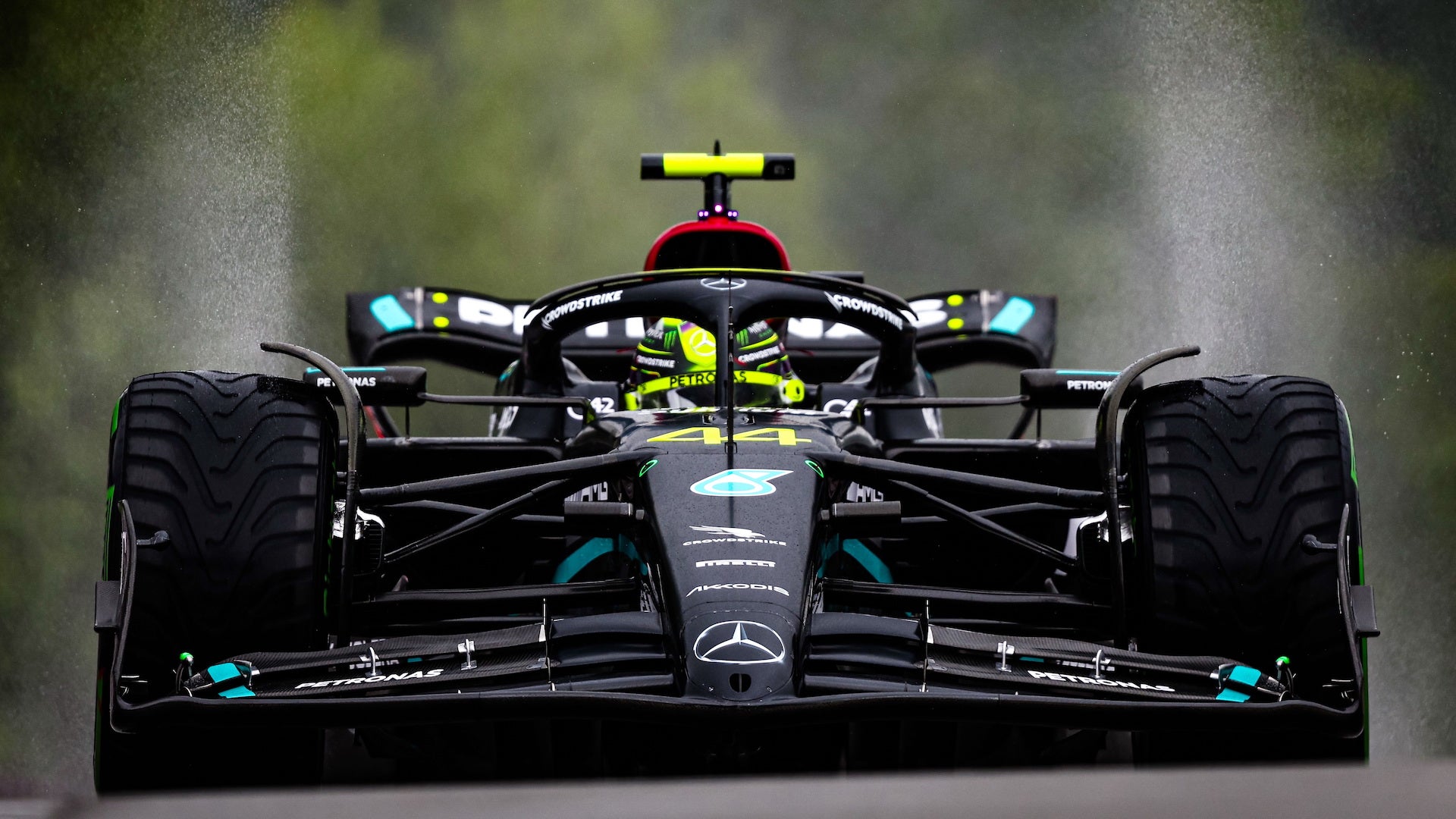
How quickly are these Formula 1 rocket ships able to travel? We examine in more detail all the crucial data that an F1 vehicle is capable of collecting.Driving an F1 vehicle is the ambition of many young children worldwide. For the pure adrenaline of operating vehicles that are marvels of remarkable engineering, as well as the glamor and glamour of participating in a sport that transports you to every corner of the world.
The fact that Formula One vehicles are the quickest in the world while traveling around a racetrack is one of the reasons why the series has long been regarded as the pinnacle of racing.Massive engines and light chassis combine to produce the kind of monsters that whizz about that you'll only notice if you blink.
How fast is an F1 car
A contemporary Formula One vehicle can run lengthy straights at an average speed of around 220 mph.Though specific circumstances must be satisfied, Valtteri Bottas's Mercedes in the 2016 Mexican Grand Prix set a record-breaking 231 mph for the highest speed ever recorded in a race.
F1 cars are not the fastest vehicles in the world in terms of sheer speed; the title goes to the IndyCars, which race in the US.The reason for this is because Formula One vehicles depend more on downforce to slow them down in a straight line, yet they are explosive in turns.
To put that into context, a Ferrari SF90 Stradale took one minute and eleven seconds to complete the lap of the Top Gear test track, making it the fastest road legal vehicle ever.In the 2004 Formula One World Championship, Fernando Alonso's Renault completed a lap in 59 seconds.
Read also:
- Look For Design Trends As 2024 F1 Cars Are Revealed
- Top 10 Classic F1 Circuits To Experience In 2024
- How Long Do Formula 1 Races Last
- A Beginner's Guide to The Formula 1 Ladder
F1 cars 0-60mph speed
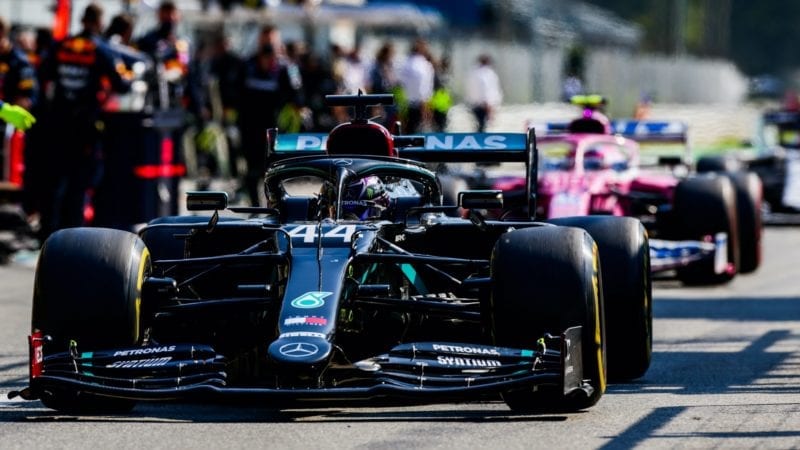
The time it takes to accelerate an automobile from a standing start to sixty miles per hour is the traditional measure of acceleration for any vehicle, from your grandmother's Nissan Note to the newest Bugatti.
The world's fastest hypercars can accelerate to that point in record-breaking speeds, usually between 2.8 and 2.3 seconds. A few vehicles, like as the Koenigsegg Gemera, claim that they have clocked times of an astounding 1.9 seconds from 0 to 60 mph, exceeding the two-second barrier.
The acceleration from 0 to 60 miles per hour in Formula 1 vehicles takes around 2.6 seconds. I know, it's a little disappointing, isn't it?
As previously stated, while F1 vehicles are indeed fast, their primary advantage is their ability to round turns at very high speeds far faster than anything you could legally drive on a public road.
How big are the engines in F1 cars?
Nowadays, 1.6-liter V6 turbocharged engines provide the most power for Formula One vehicles.Since the sport aims to reduce carbon emissions and become more ecologically friendly, they are hybrid powered.
In the past, engines were much larger. For example, certain automobiles from the 1990s had V12 engines, which had 12 cylinders rather than 6.But F1 power units nowadays can generate 1,000 bhp (break horsepower), and modern vehicles are faster than ever.
This is due in part to the advanced aerodynamics and engine technology, as well as the vehicles' weight, which has a maximum restriction of 798 kg (fuel excluded).
Read also: A Beginner’s Guide to Formula 1 in the USA
What is DRS?
In an effort to enhance the frequency of overtakes on the circuit, the Drag Reduction System (DRS) was used prior to the 2011 season.Every track on the schedule will feature two (or sometimes more) designated DRS zones, most often on lengthy straightaways where the quickest cars can reach.
To use DRS, which is controlled by a button on the steering wheel, the following driver has to be one second ahead of the leading vehicle.This causes a flap in the back wing to open up like a letterbox, which lowers aerodynamic drag and allows the vehicle to overtake the leading one at a speed of around 10 mph.
DRS detractors contend that it has become too strong and is causing "artificial" overtaking that doesn't really need any driving talent.The help's effectiveness varies from track to track, but there are no plans to discontinue it.
Read also: Why F1 is no stranger to Madrid