.png)
Learning to drive is a major milestone. But many new drivers feel nervous when they first get behind the wheel. They worry about controlling the car smoothly and safely. This article covers the most important basic car control techniques to help you become a confident driver. We will look at steering, braking, speed control, and more. These skills keep you and others safe on the road. By the end, you will have a clear plan to practice and master these essential skills.
Basic Car Control Techniques Every Driver Must Know
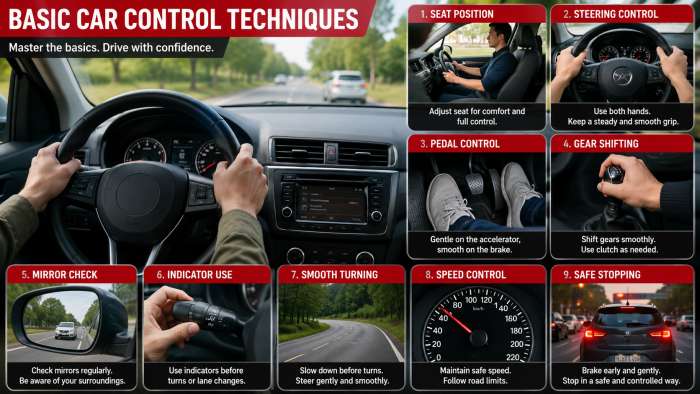
This is your starting point. The basic car control techniques you learn early on form the foundation for all your future driving. Good control leads to safer driving. Bad habits can lead to accidents. Let's look at the key areas you need to know.
Essential Steering Methods for Safe Driving
How you hold and turn the wheel matters a lot. Good steering helps you keep the car exactly where you want it.
Hand Positions on the Steering Wheel
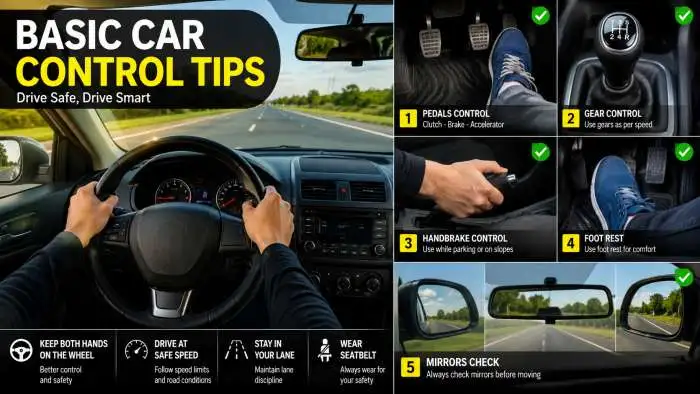
You should always place your hands in the correct spot. Experts suggest the "9 and 3" position. This is the best way for maximum control . Think of the steering wheel like a clock. Put your left hand at 9 o'clock and your right hand at 3 o'clock. You can also use the "8 and 4" position. This can be more relaxed on long drives . Never put your thumbs inside the wheel. Keep them on the outside. This protects them if the airbag goes off .
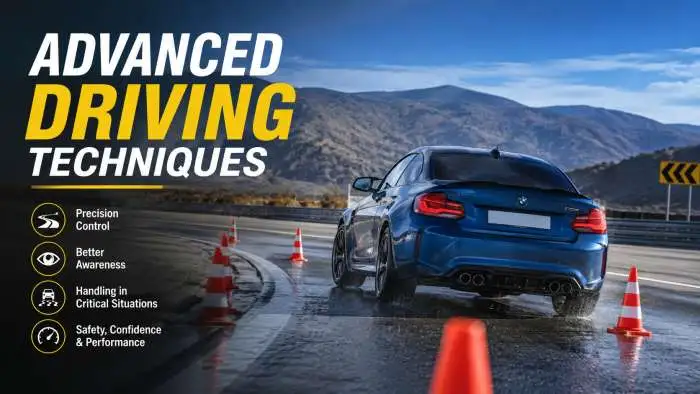
You may also read :- Advanced Driving Techniques: Master Defensive Driving Skills
Mastering Push-Pull Steering
The push-pull method is also known as hand-to-hand steering. It is often the safest choice . One hand pushes the wheel up. The other hand pulls it down. Your hands never cross over the top of the wheel. This keeps your arms safe from the airbag. It also gives you good control at lower speeds . For example, to turn right, your left hand pushes up. Your right hand slides down to pull.
Using Hand-Over-Hand Steering
Hand-over-hand steering is for sharper turns. You use this for parking or tight corners . To turn left, your right hand crosses over your left hand and pulls the wheel down. This gives you more turning power. It is also used to correct a skid . Always make sure to use smooth movements. Do not jerk the wheel.
One-Hand Steering Techniques
You might need to use one hand sometimes. This is only for backing up or using controls like the wipers . When you back up, turn your body to look behind you. Put your other hand on the wheel at 12 o'clock. For other times, use one hand at 3 or 9 o'clock . Remember, two hands are always better for full control. Use this technique sparingly.
Smooth Acceleration and Speed Control
Knowing how to use the gas pedal is key. It helps you start and stop smoothly. It also saves gas.
Progressive Acceleration
This means pressing the gas pedal slowly. You increase pressure steadily to reach the speed limit . Do not floor it from a stop. A smooth start is safer and more comfortable. It also helps keep the car balanced. Practice this to avoid jerky movements .
Light Acceleration for Turns
Light acceleration means a very light touch on the gas . Use it for slow parking lot moves or starting a turn. This gentle press helps you control the car. It also keeps you from moving too fast. This is very helpful in tight spaces. It helps maintain a slow, steady speed.
Understanding Braking Techniques
A good driver uses the brake pedal the right way. You should never slam on the brakes unless it is an emergency.
Using Controlled Braking
Controlled braking uses firm, steady pressure . This is for normal stops. Apply the brake until you feel resistance. Then press down evenly. This stops the car without a sudden jolt. It is also easier on your brakes. It helps your car slow down safely.
Trail Braking for a Smooth Stop
Trail braking is a gentle release of the brake . It is used in the last second or two of a stop. It keeps the car from jerking when it comes to a full stop. This makes your ride smoother. It also helps when you want to "creep" forward slowly .
Covering the Brake
Covering the brake means hovering your foot over it . You are not pressing it yet. This gets you ready to stop fast. Do this when you see a potential hazard. It cuts down reaction time. This is a key safety habit. It prepares you for an emergency stop.
Mastering the Clutch and Gear Shift for Manual Transmission
Driving a manual car can be tricky. It requires coordination between your hands and feet. But it gives you more control of the car.
How the Clutch and Pedals Work
A manual car has three pedals. The accelerator is on the right. The brake is in the middle. The clutch is on the left . Remember the "ABC" trick: Accelerator, Brake, Clutch . You use your right foot for the gas and brake. Your left foot is only for the clutch. Press the clutch in to change gears.
Moving Off and Stopping Smoothly
Moving off from a stop requires practice. You need to find the "biting point" of the clutch. This is where the engine starts to engage. Release the clutch slowly as you press the gas. This prevents the car from stalling. Stop smoothly by pressing the clutch and brake together. This is a key skill for new drivers.
Proper Lane Positioning and Observing Your Surroundings
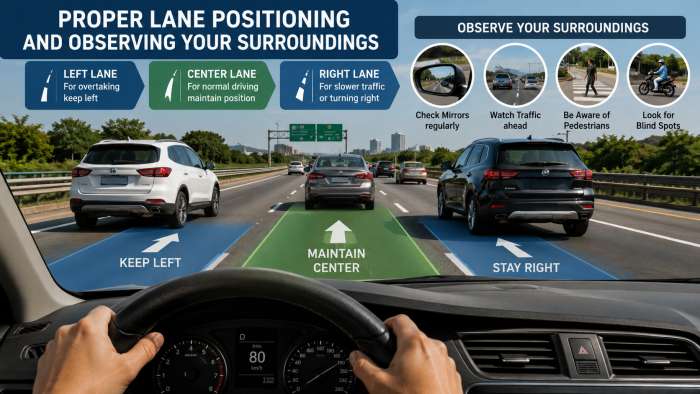
You need to know where your car is on the road. Good lane positioning keeps you safe.
Maintaining the Right Lane Position
Lane Position 1 is the center of your lane. This is for normal driving . It gives you space from cars and curbs. Lane Position 2 is near the left side. Use it for left turns . Lane Position 3 is near the right side. Use it for right turns and parking . Knowing these positions helps you communicate with others.
Searching the Road Ahead
Always look ahead when you drive. Try to search 20 to 30 seconds ahead. This helps you spot problems early . Watch for cars braking or people crossing. Also, check your mirrors often. A quick glance can help you see what is behind you. This shows you what is coming up. It helps you plan your next move.
Using Safe Following Distance
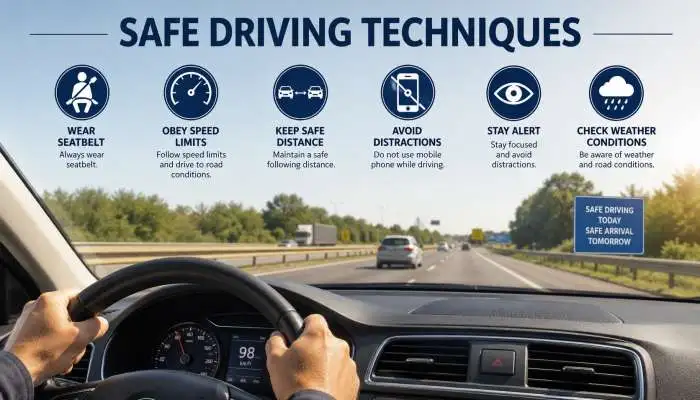
You must leave enough space between you and the car ahead. A safe following distance is at least 4 seconds . Choose a fixed object on the side of the road. When the car ahead passes it, start counting. Count "one-one-thousand, two-one-thousand." If you reach the object before 4 seconds, you are too close. Increase your distance in bad weather or heavy traffic .
Communicating Your Intentions to Other Drivers
You must let other people know what you plan to do. This prevents accidents and keeps traffic moving.
Using Turn Signals Effectively
Always use your turn signals. Signal before you turn or change lanes. Give other drivers at least a 2-second warning. This is a simple way to stay safe. It lets people know your plans. This is one of the most important basic car control techniques. Do not forget to turn off your signal after the turn.
Using Headlights for Safety
Turn your headlights on during the day. It makes you more visible to other cars . Use low beams in fog, rain, or snow . Use high beams on dark roads with no traffic. But do not forget to dim them for oncoming cars. This helps others see the road.
Using Your Horn Wisely
Use your horn to alert other drivers. This is for emergencies only . Do not use it in anger. It can be used to avoid an accident. It can also alert a distracted pedestrian. It is a tool for safety, not for frustration.
Expert Tips for Mastering Basic Car Control Techniques
Experts agree on a few key points for great driving. Paul Ripley, a driving expert, says smoothness is the goal. He notes that drivers should avoid jerky movements with the wheel and pedals . The goal is to keep the car balanced.
Matsumoto Naoki, a former Subaru engineer, stresses the importance of hand position. He notes that the "9 and 3" position helps you react faster . This position gives you the most leverage. It also prepares you for an emergency swerve.
The Oregon DMV guide reminds new drivers to turn their heads. Always check your blind spots before moving. A simple shoulder check can save a life .
Conclusion
Good driving comes from practice. The basic car control techniques we covered are a great starting point. Focus on smooth steering, acceleration, and braking. Always use your signals. Check your mirrors. Leave enough space from other cars. Practice these skills in a safe, empty area first. Then, take them to the road. With time, these actions will become second nature. You will become a safer and more skilled driver.
Frequently Asked Questions
What are the most important basic car control techniques?
The most important techniques are smooth steering, controlled braking, and proper acceleration. Understanding lane positioning and safe following distance is also key .
Where should my hands be on the steering wheel?
The recommended hand position is "9 and 3" for maximum control. You can also use "8 and 4" for a more relaxed grip on longer journeys .
How do I brake smoothly?
Use a firm, steady pressure on the brake pedal. For a jerk-free stop, slightly release pressure just before the car comes to a complete halt. This is called trail braking .
What is a safe following distance?
You should maintain at least a 4-second gap between you and the car ahead. Count "one-one-thousand" to measure the time it takes you to reach the same spot as the car in front .
What should I do when I first start driving?
Start by practicing in an empty parking lot. Focus on smooth starts and stops. Practice turning. Make sure you feel comfortable with the pedals and wheel before going on busy roads .