.png)
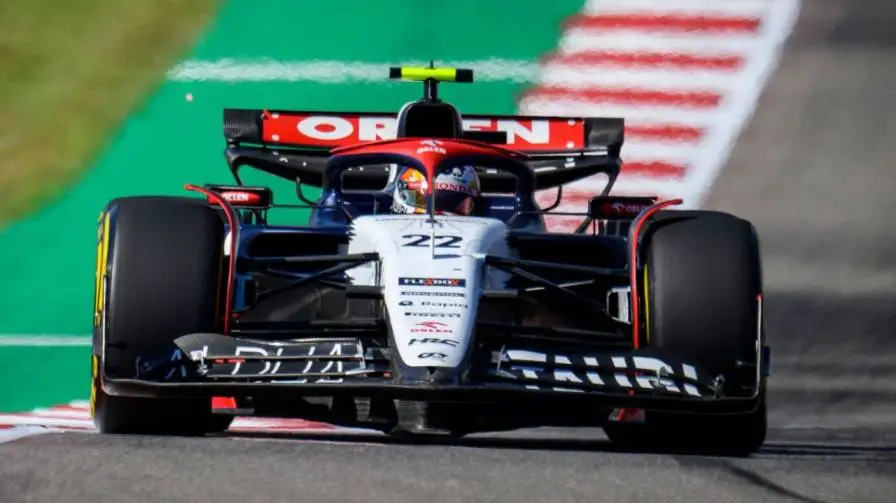
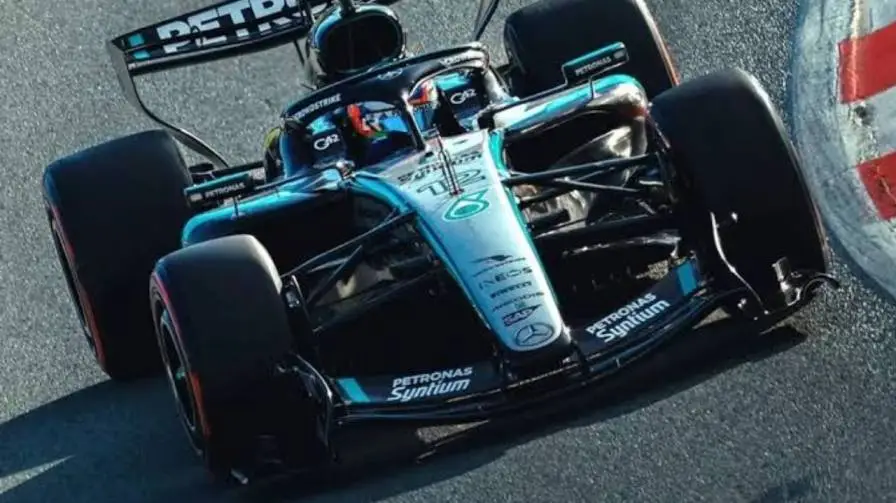
A Formula 1 race does not have a fixed lap count. Instead, every Grand Prix is built around a target distance, and the number of laps changes from track to track depending on how long one lap is. On the current calendar, that number swings from as low as 44 laps at one circuit to as high as 78 laps at another .
If you have ever watched a race and heard the announcer say "this is a 57-lap race" and then tuned in the next week to hear "this is a 71-lap race," this is why. The lap count is not random, and it is not decided by the broadcaster. It comes from a simple rule that every race must meet.
The Rule That Decides Every Lap Count
Formula 1 sets a minimum race distance. For almost every Grand Prix, that minimum is 305 kilometers . The race must run for the smallest number of complete laps that pushes the total distance past that 305-kilometer mark .
That is the whole system. A track that is very long needs fewer laps to reach 305 kilometers. A track that is short and tight needs many more laps to get there. The lap count is just the result of dividing the target distance by the length of one lap, then rounding up to the next full lap.
Take the Belgian Grand Prix at Spa-Francorchamps as an example. One lap there is about 7 kilometers long. To pass 305 kilometers, the race only needs 44 laps . Now compare that to the Monaco Grand Prix, where one lap is just over 3.3 kilometers. Reaching the same kind of distance would take far more laps, and that is exactly what happens. Monaco runs 78 laps, the highest count on the calendar .
This is why the answer to "how many laps" always comes with a follow-up question: which race?
Why Monaco Is the One Exception?
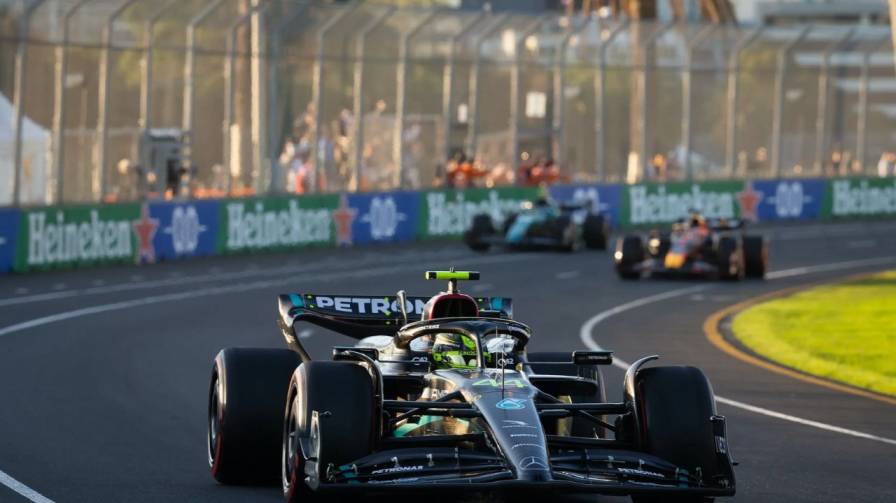
Monaco does not follow the 305-kilometer rule. It has its own minimum distance of 260 kilometers .
The reason is practical. Monaco is a street circuit. It is narrow, twisty, and slow compared to permanent racetracks. If the race were forced to run 305 kilometers, the cars would be on track for an unusually long time because average speeds are so low. The shorter distance keeps the race within a reasonable window while still delivering the full challenge of the circuit.
Even with that lower minimum, Monaco still has the most laps of any race. At 3.337 kilometers per lap, 77 laps would only cover about 257 kilometers, which falls short of the 260-kilometer minimum. So the race goes to 78 laps, and the total distance lands just over 260 kilometers . That is how a shorter race distance still produces the longest lap count of the season.
Read Also: F1 Active Aerodynamics Explained
Real Lap Counts from the Current Calendar
Seeing the numbers side by side makes the system clear. Here is how the lap counts look across a selection of races:
- Spa-Francorchamps (Belgian GP): 44 laps, because the track is the longest on the calendar at over 7 kilometers
- Silverstone (British GP): 52 laps, a middle-of-the-road figure for a medium-length circuit .
- Monza (Italian GP): 53 laps, another typical count for a fast, flowing track .
- Singapore (Marina Bay): 62 laps on a long street circuit .
- Monaco: 78 laps, the highest count of the year .
Every one of these numbers comes from the same calculation. The track length determines the lap count. Nothing else does.
What About Sprint Races?
Sprint races work on a completely different scale. A Sprint is not a full Grand Prix. It covers roughly 100 kilometers, which is about one-third of a normal race distance .
Because the target distance is so much shorter, the lap count drops sharply. A Sprint at a track like Miami might run around 19 laps. At a shorter circuit, it could be a few more. At a longer one, a few less . The exact number still depends on the track, but the principle is the same: distance first, laps second.
Sprints also do not require a pit stop. The race is short enough that drivers can push flat out from start to finish without managing tires for a long stint . That changes the feel of the race entirely, but the lap count still comes from the same distance-based math.
You May Also Like: F1 2026 Active Aero Rules Explained: Everything You Need to Know
Why Some Races Do Not Go the Full Distance?
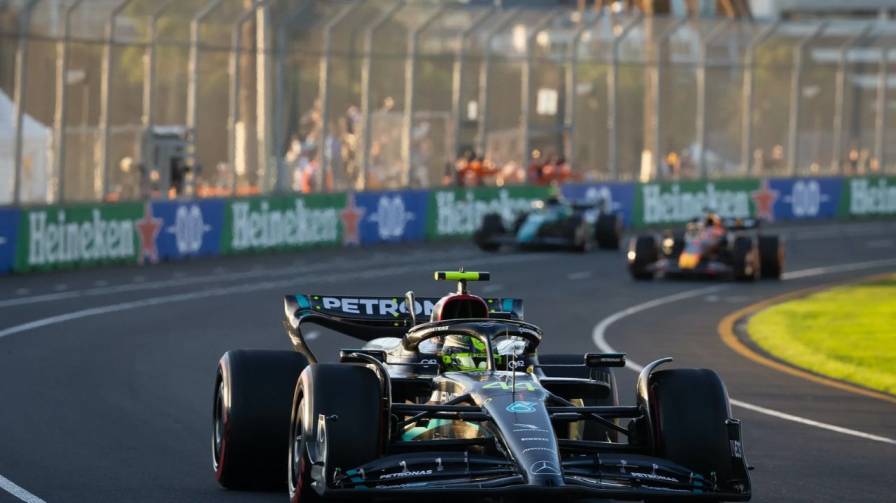
There is one more piece to this puzzle. Even though every race has a scheduled lap count, the race does not always reach that number.
Formula 1 races have a time limit. The clock runs for two hours of racing, and if the race is stopped with a red flag, the total time including the stoppage cannot exceed three hours . If a race hits that limit before the scheduled laps are done, it ends at the next full lap after the clock runs out. The lap count on the results sheet will be lower than the number printed in the schedule.
This happens most often when there are long safety car periods or red flag stoppages. The laps tick by slowly, the clock keeps running, and the race runs out of time before it runs out of laps. It is rare, but it is part of why the scheduled lap count and the final lap count do not always match.
Conclusion
If you take one idea away from this, make it this: Formula 1 races are measured in distance, not laps. The lap count is a result, not a rule. Spa needs 44 laps to cover the distance. Monaco needs 78. Silverstone sits in between at 52. Every number you see on race day comes from that single principle.